Project’s goal.
Designing a global fintech application that transcends standard banking functions. The project focused on creating intuitive solutions for complex digital banking processes and resolving systemic user pain points.
1__Empathize Phase.
Semi-structured Interview.
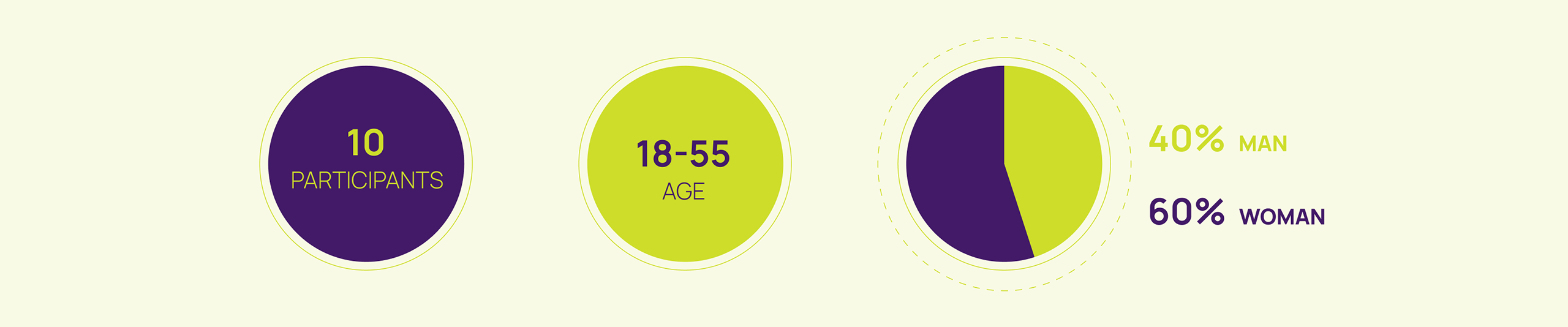
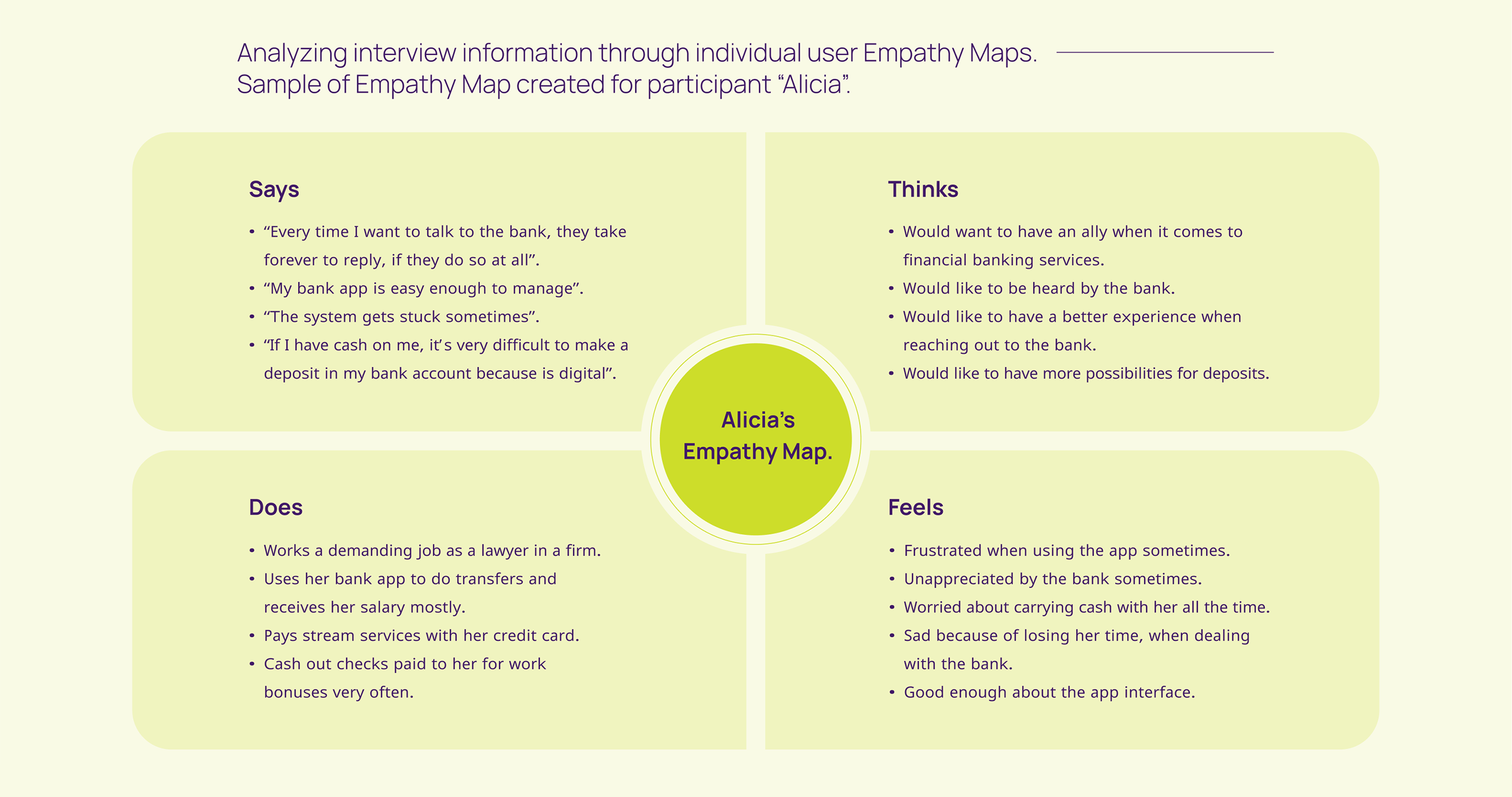
The interview process aimed to empathize with user’s and their digital banking experiences. Comprehend their most difficult issues, the pain points they face, and general insights.
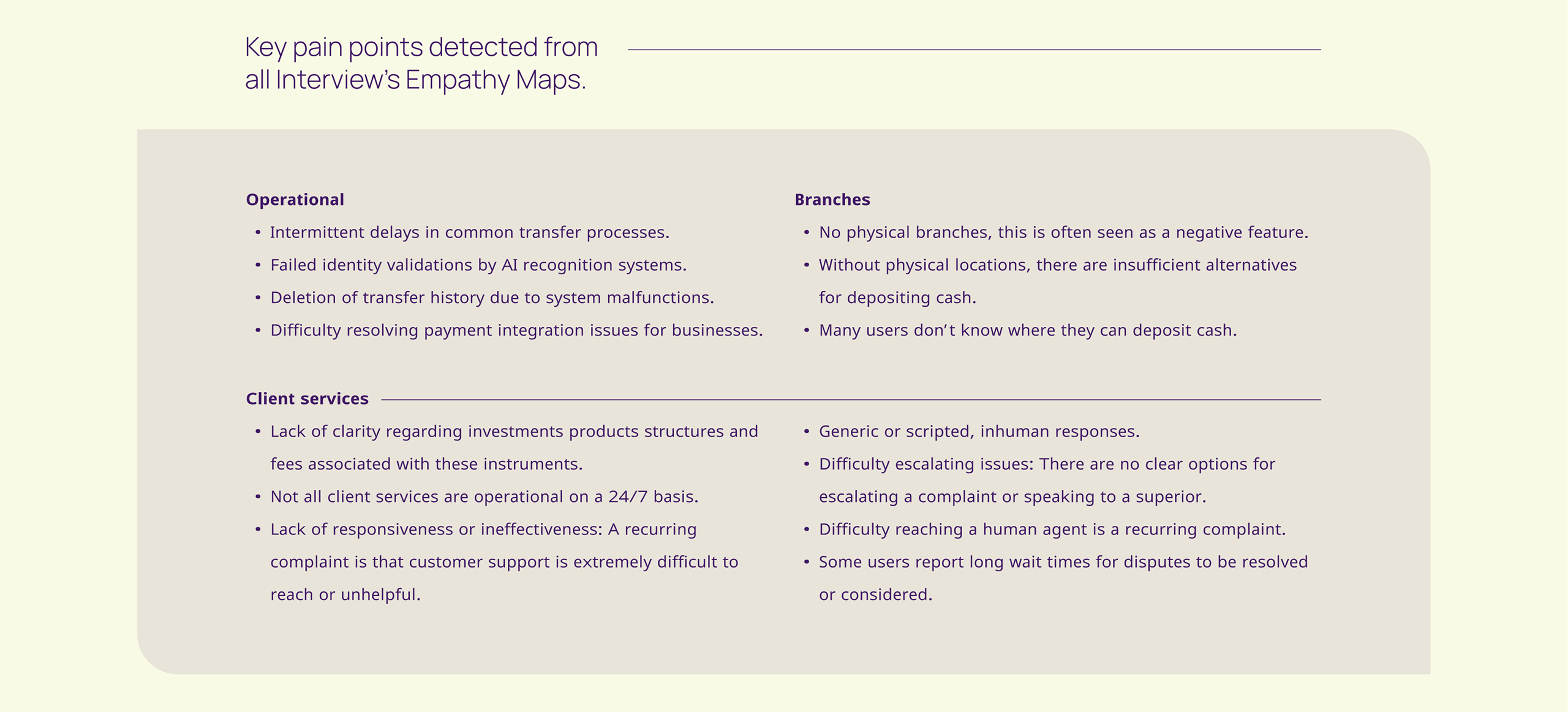
1__Empathize Phase.
User Personas.
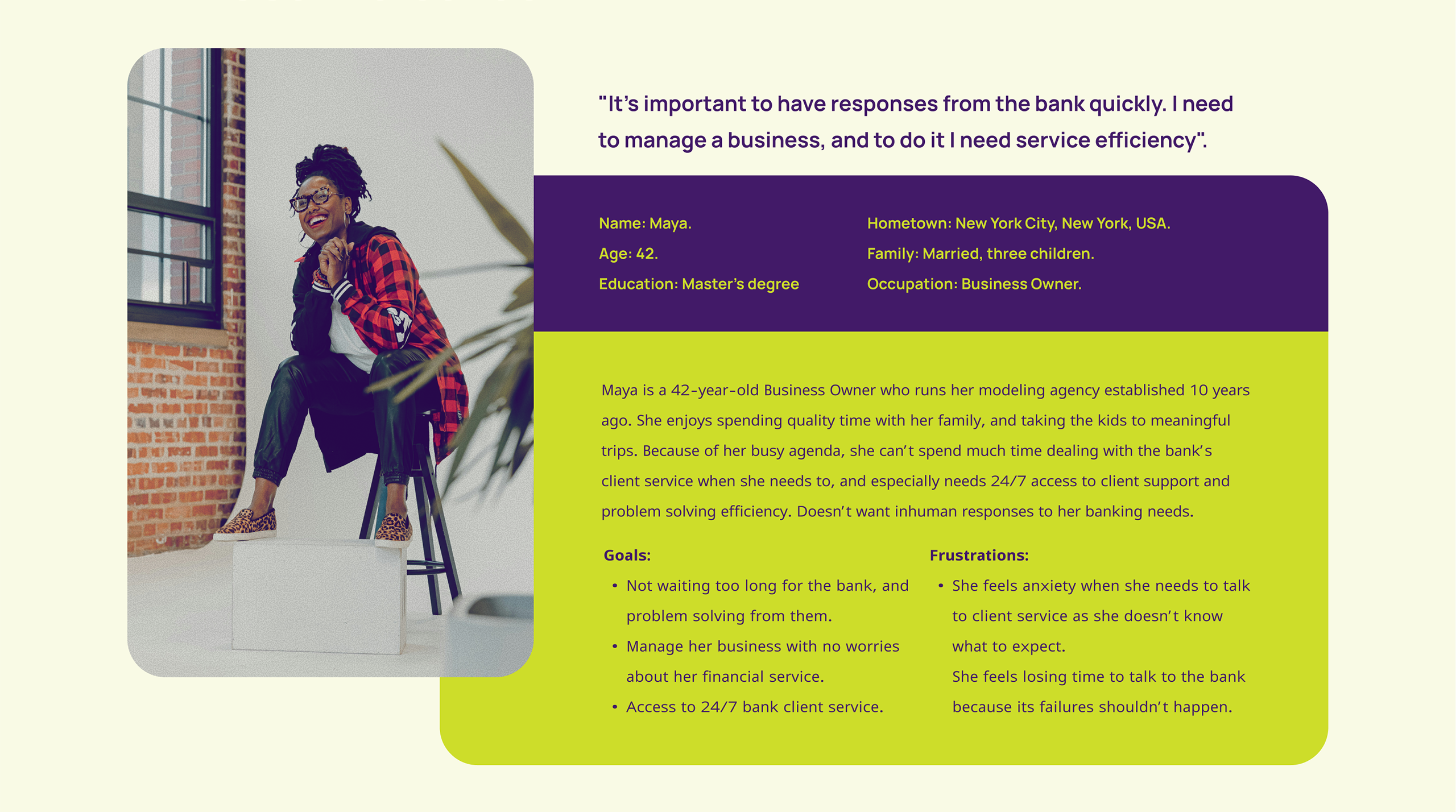
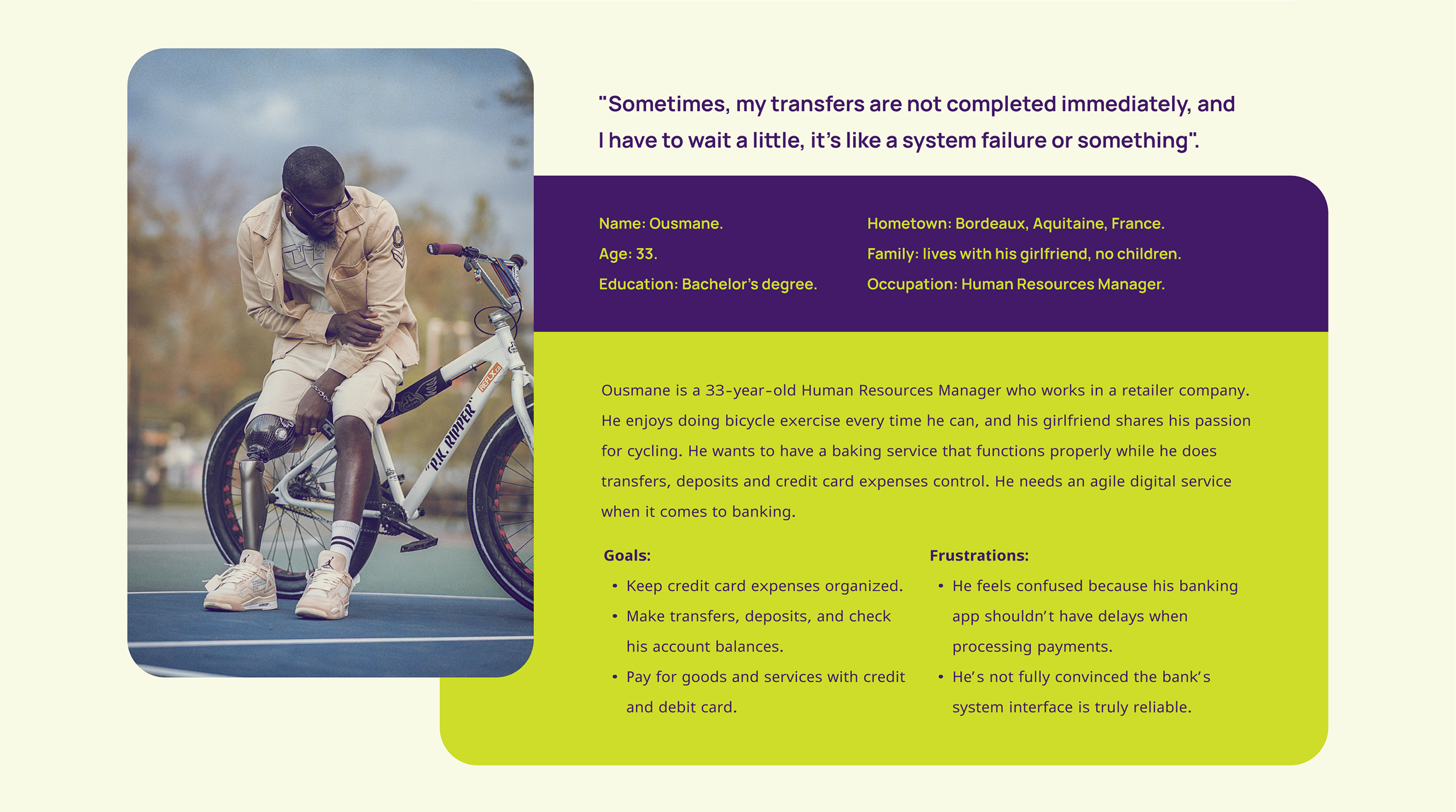
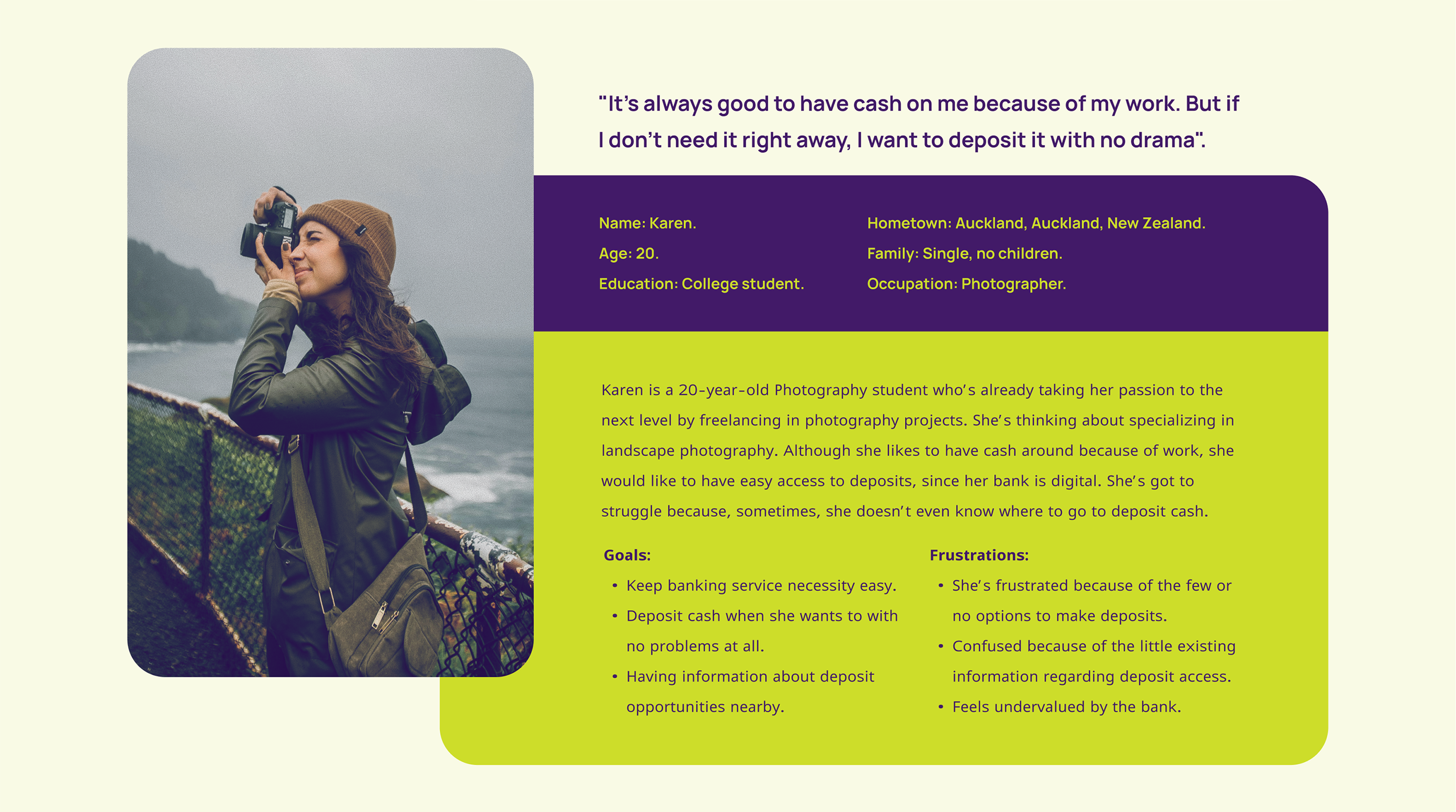
Created to represent the most important groups of similar users detected in the interviews. Empathize with them and their pains in order to find, in future processes, possible design solutions for their needs.
2__Define Phase.
Problem Statements.
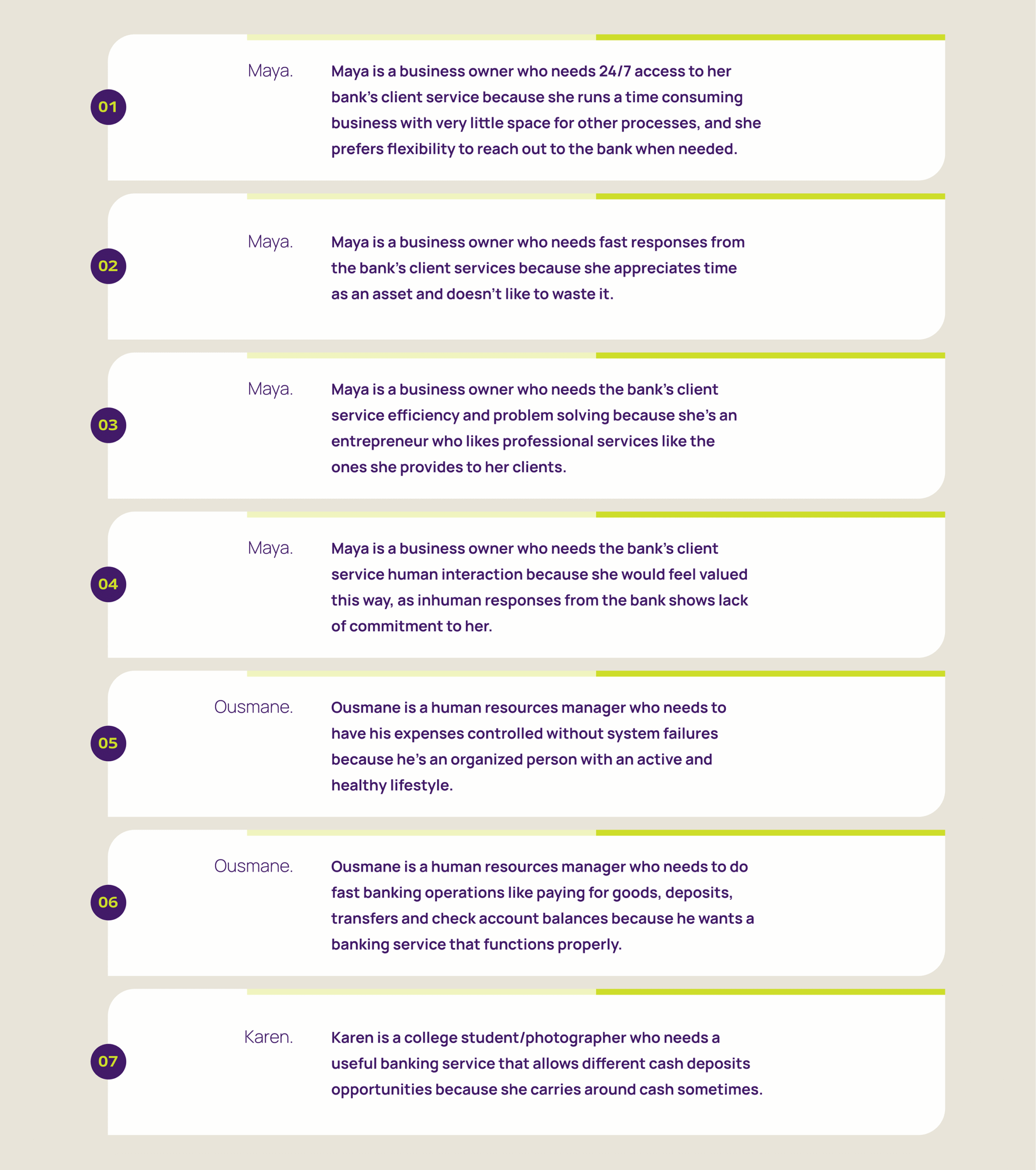
These were created to better identify the problems the design should solve or the needs the design must address.
2__Define Phase.
Value proposition.
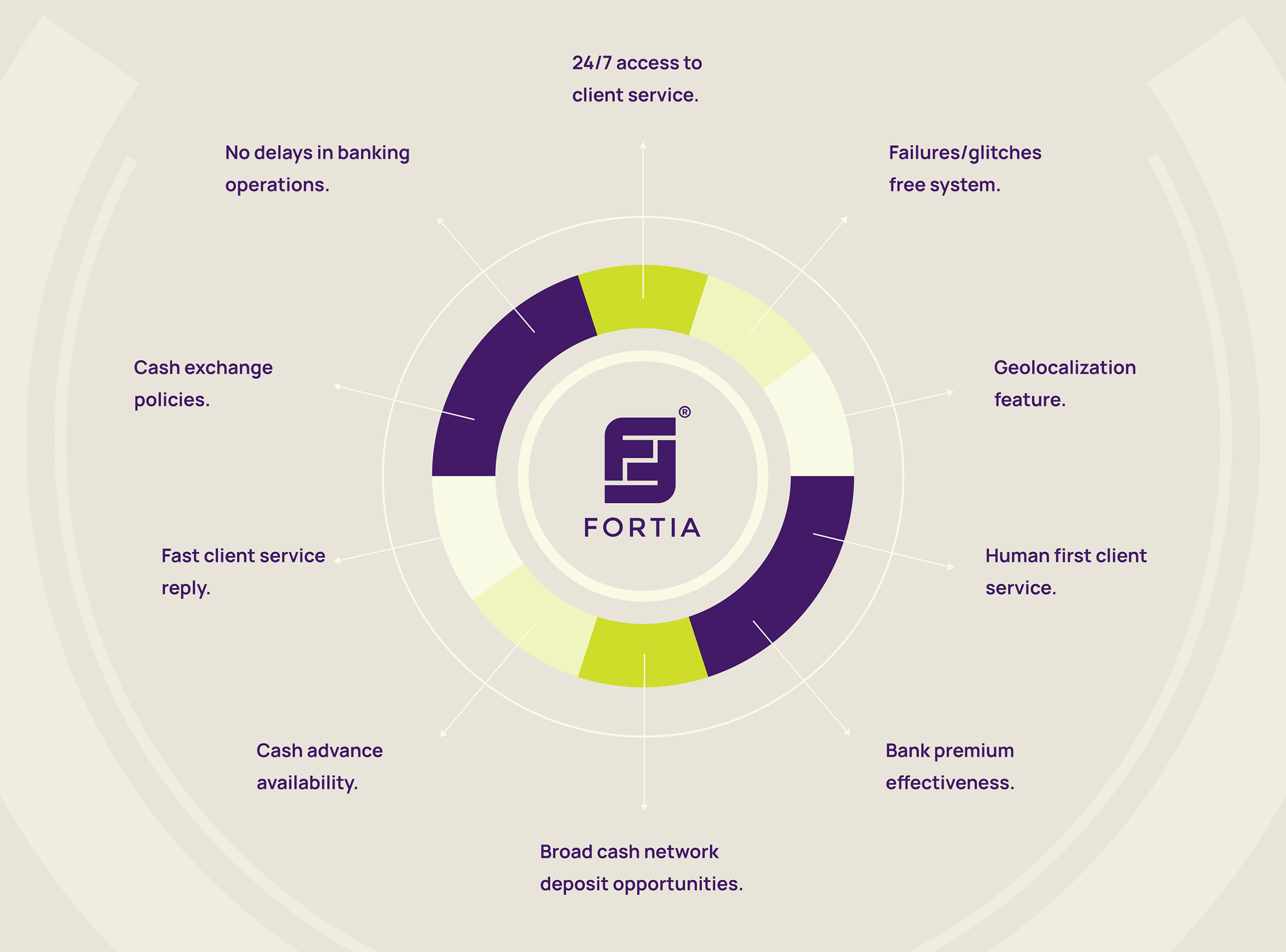
Describes in short and compelling statements how the product could address users’ needs and create unique value for users.
3__Ideate Phase.
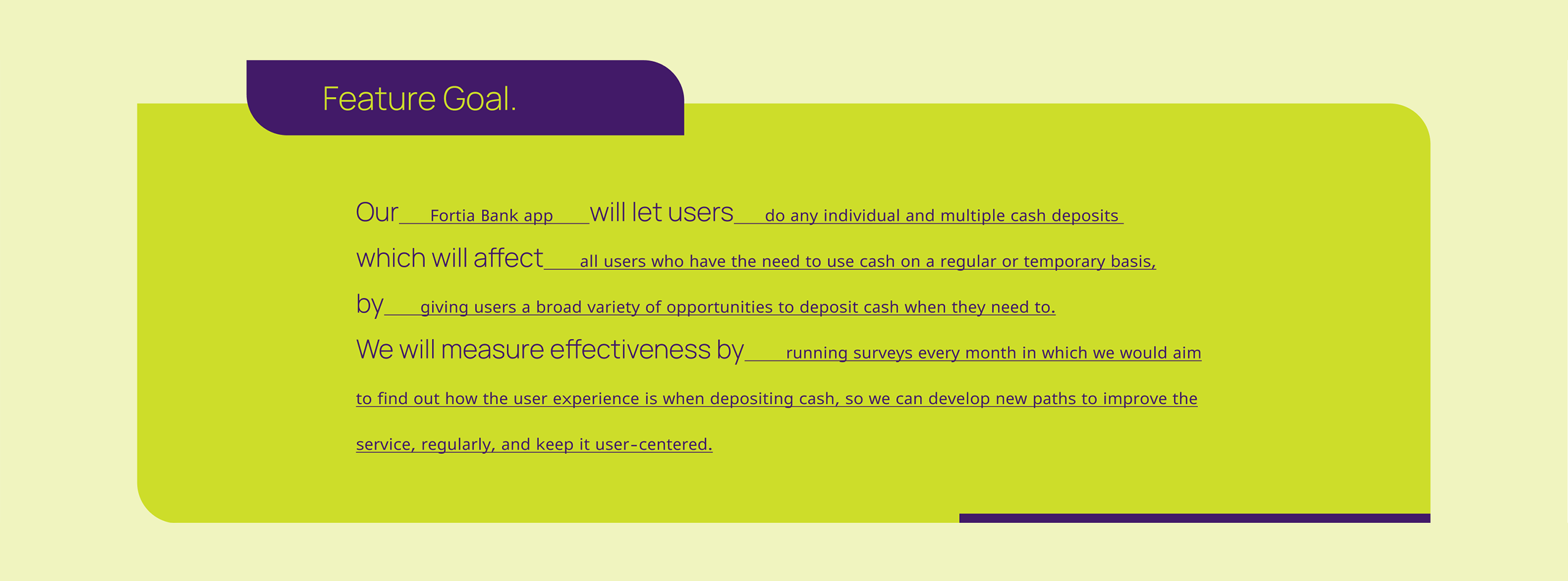
Goal statements.
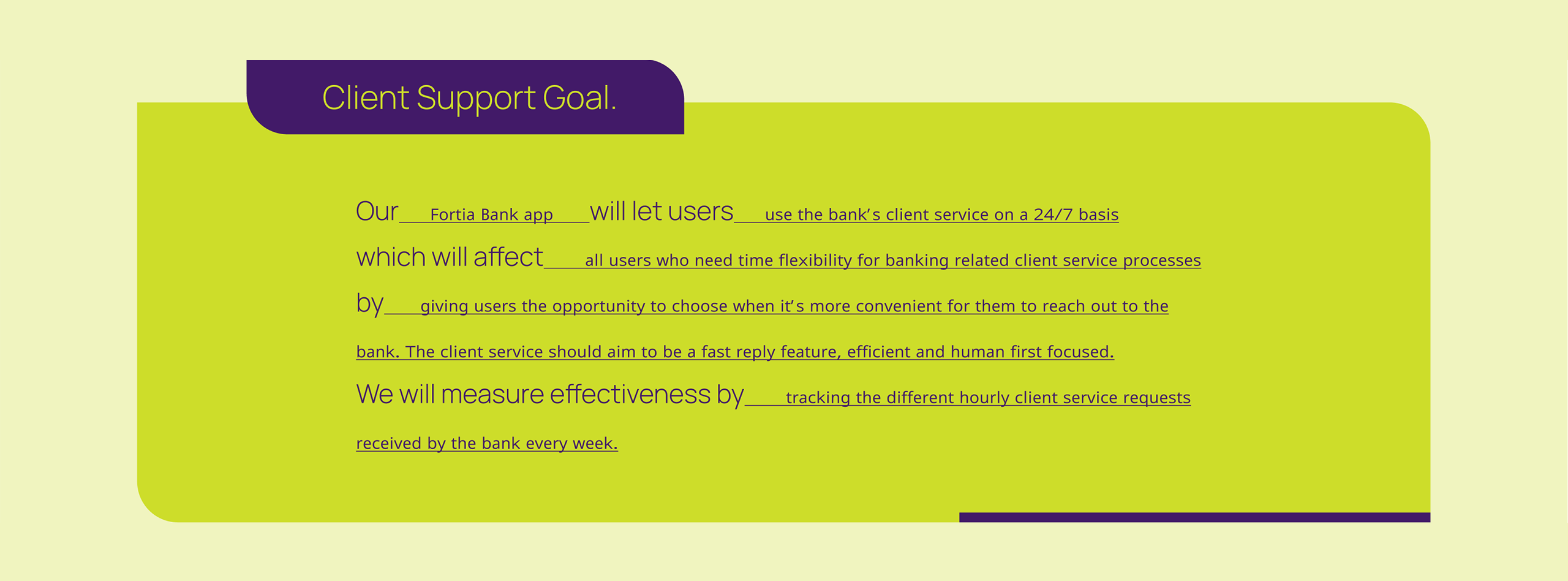
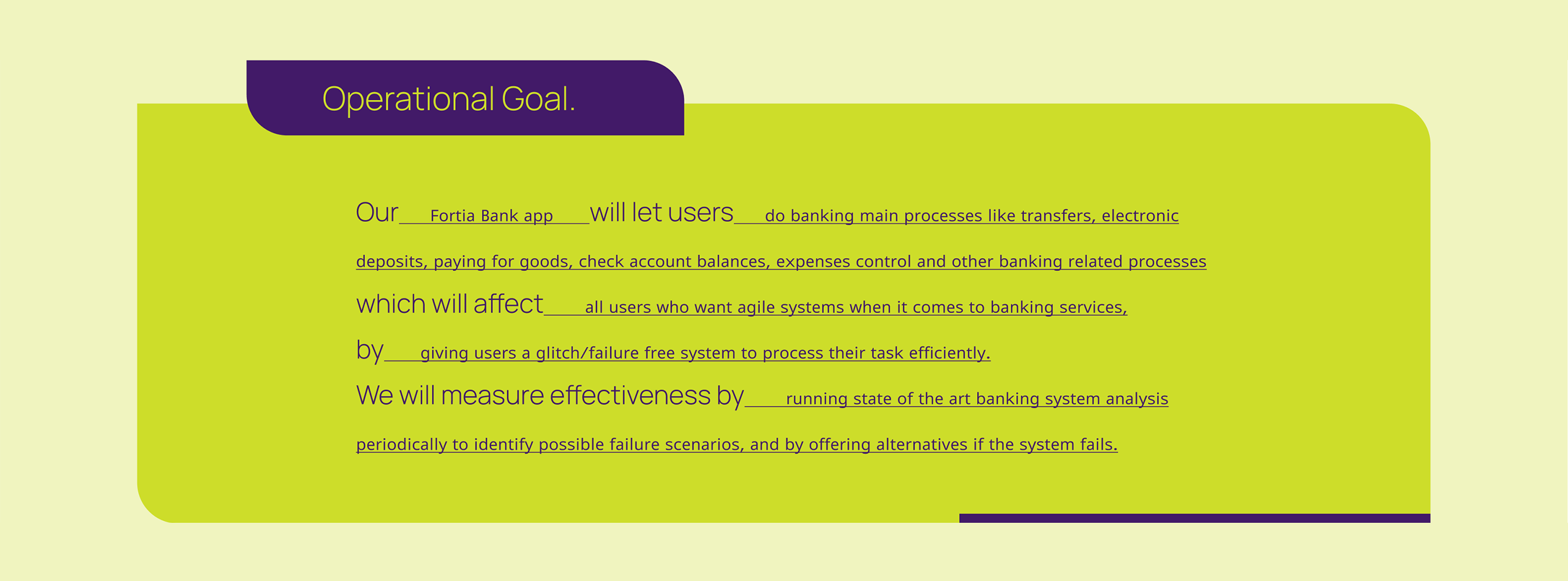
Describes the product and its benefits for the user. In other words, the goal statement provided the ideal solution for the design challenges.
3__Ideate Phase.
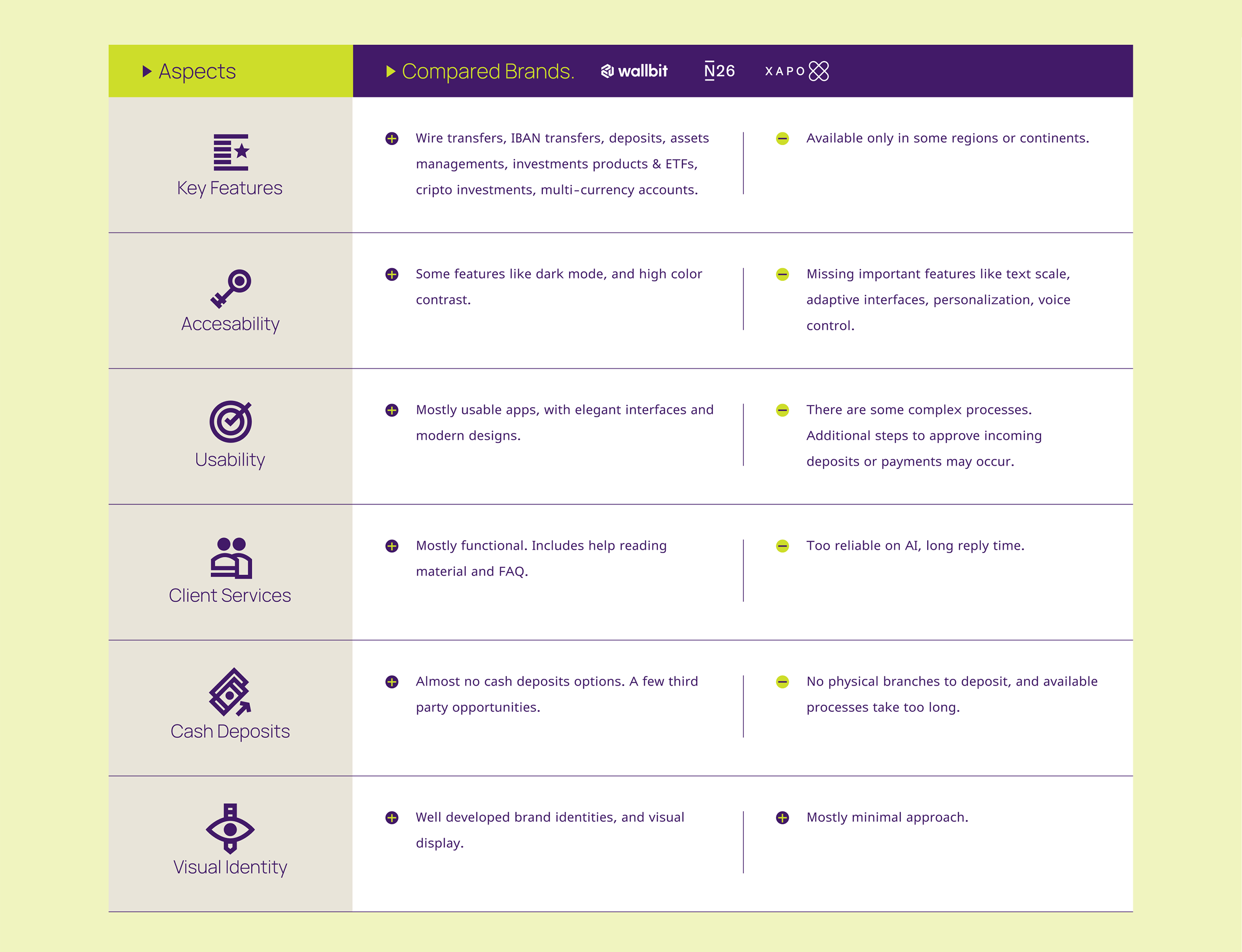
Competitive Audit Report.
Created to analyze competitors, their business models, identify their strengths, weaknesses, and tactics, to gain insights that helped inform the bank app design process.
3__Ideate Phase.
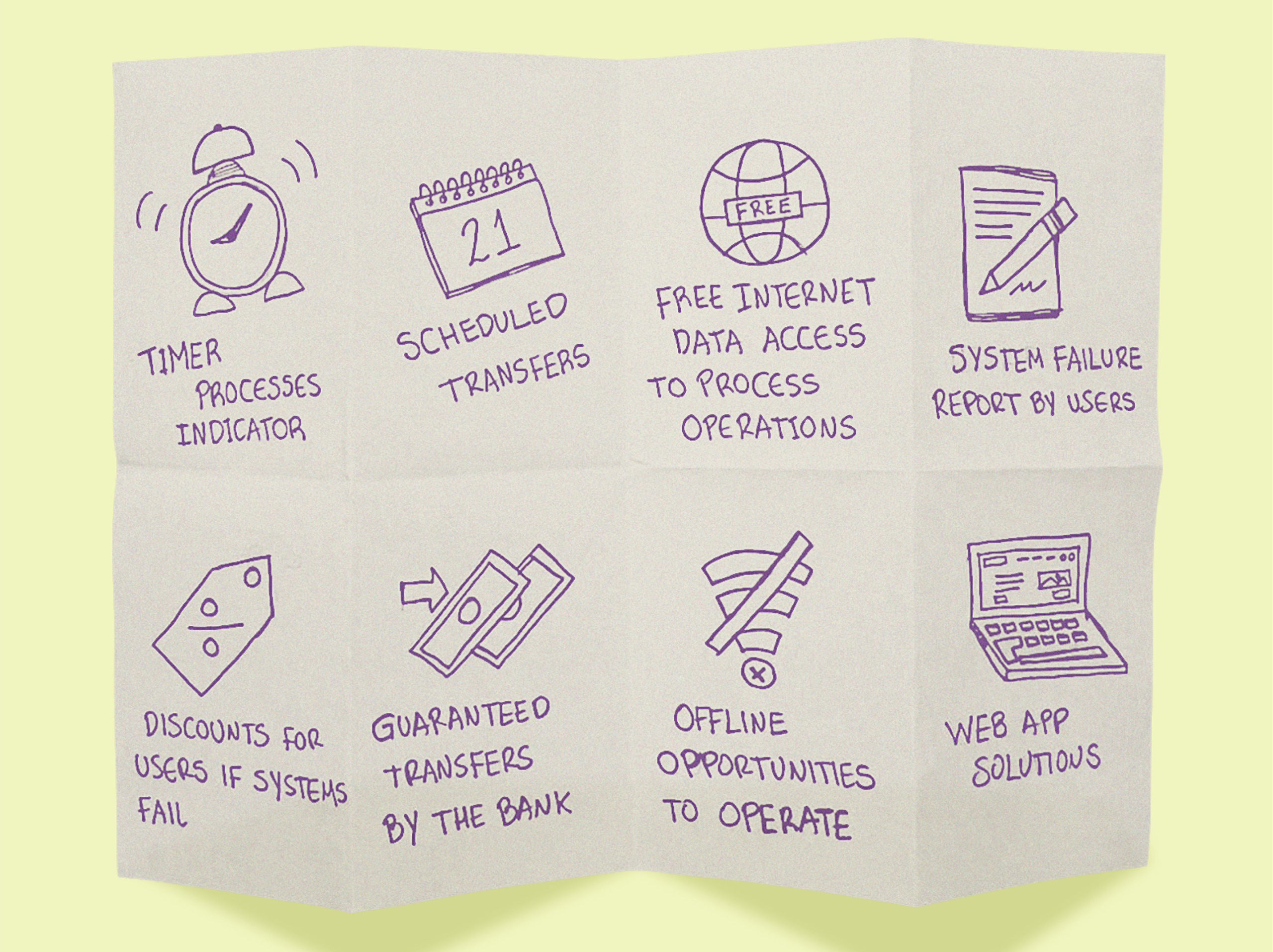
“Crazy eights” sketches.
This technique was used to rapidly try to find visual ideas to address all problem statements. Below there’s a sample of the sketches explored for problem statement number 6.
4__Prototype Phase.
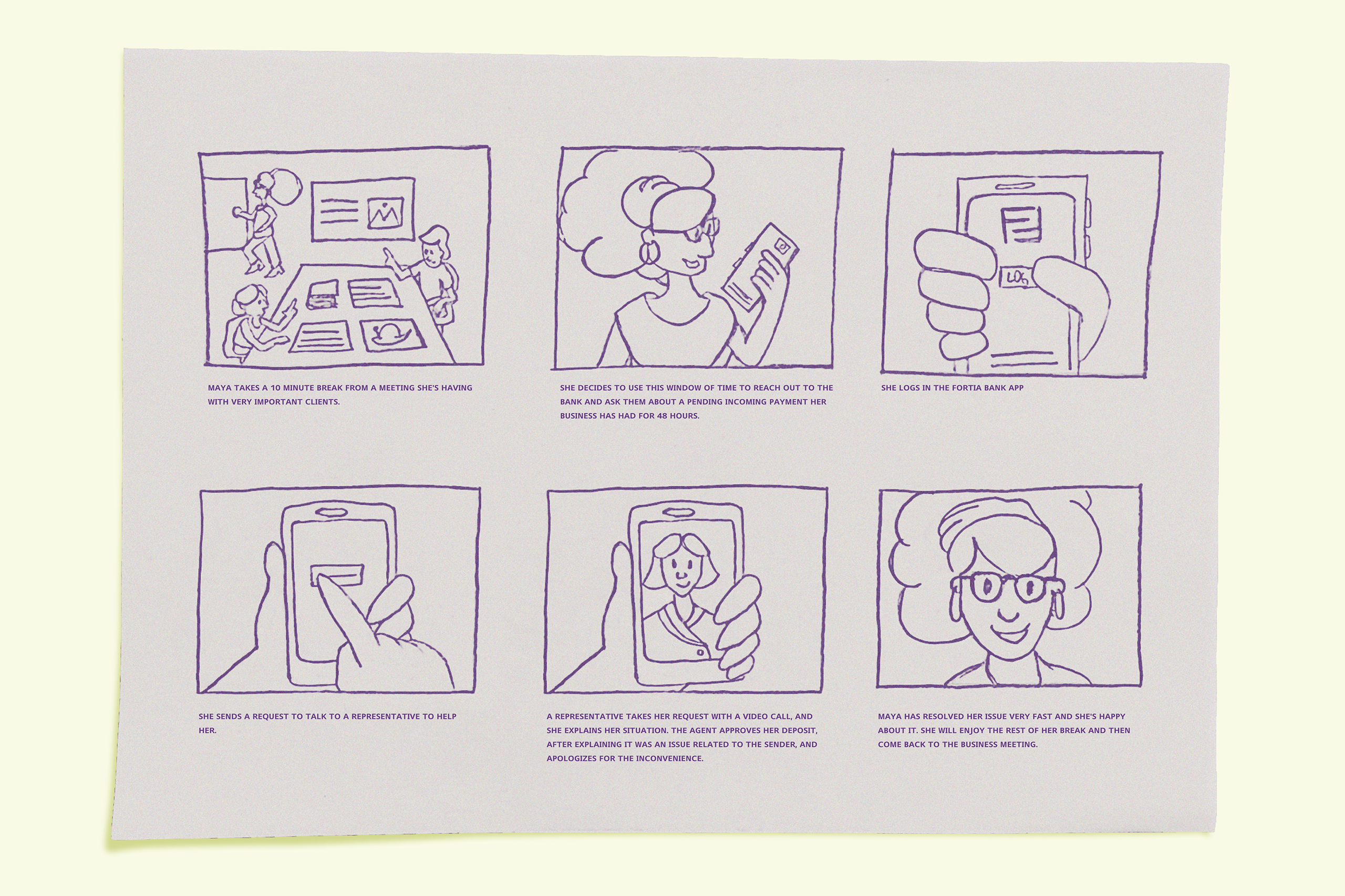
Big Picture Storyboard.
These storyboards were created to think about how people would use the bank app and why it could be useful, so the entire user experience could be evaluated. One storyboard was created for each problem statement. Below there’s a sample of the one created for problem statement number 4.
4__Prototype Phase.
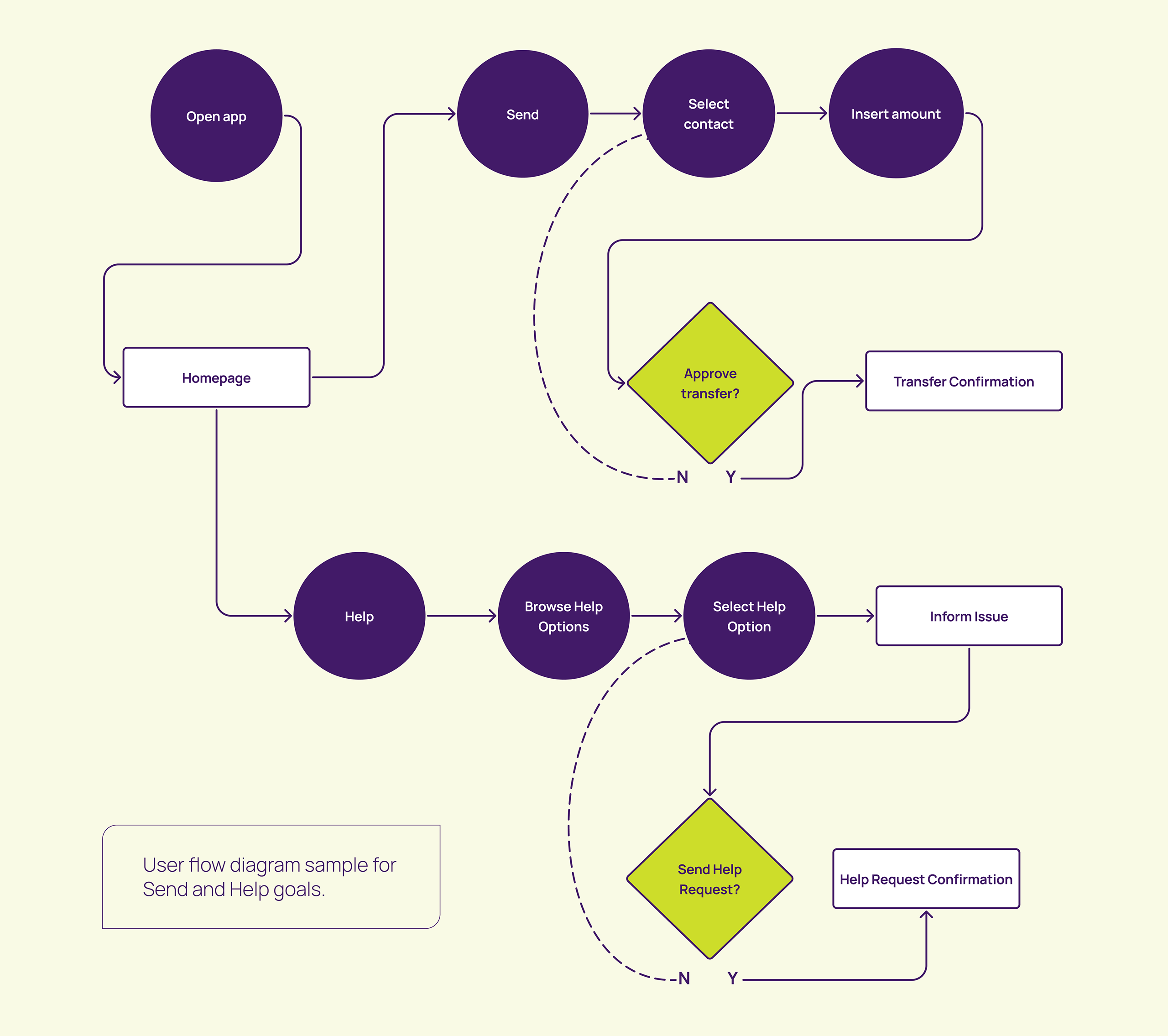
Primary User Flow.
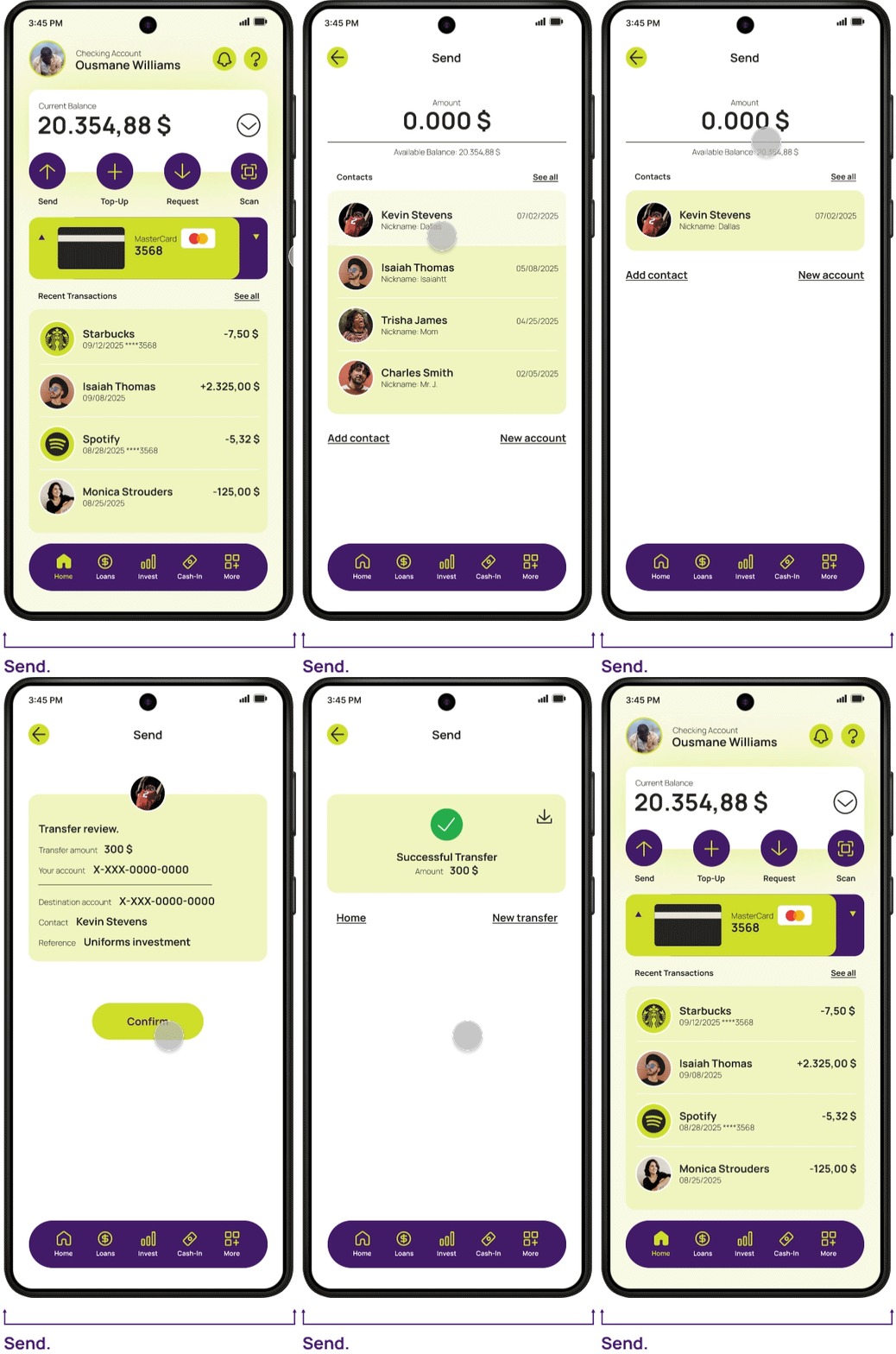
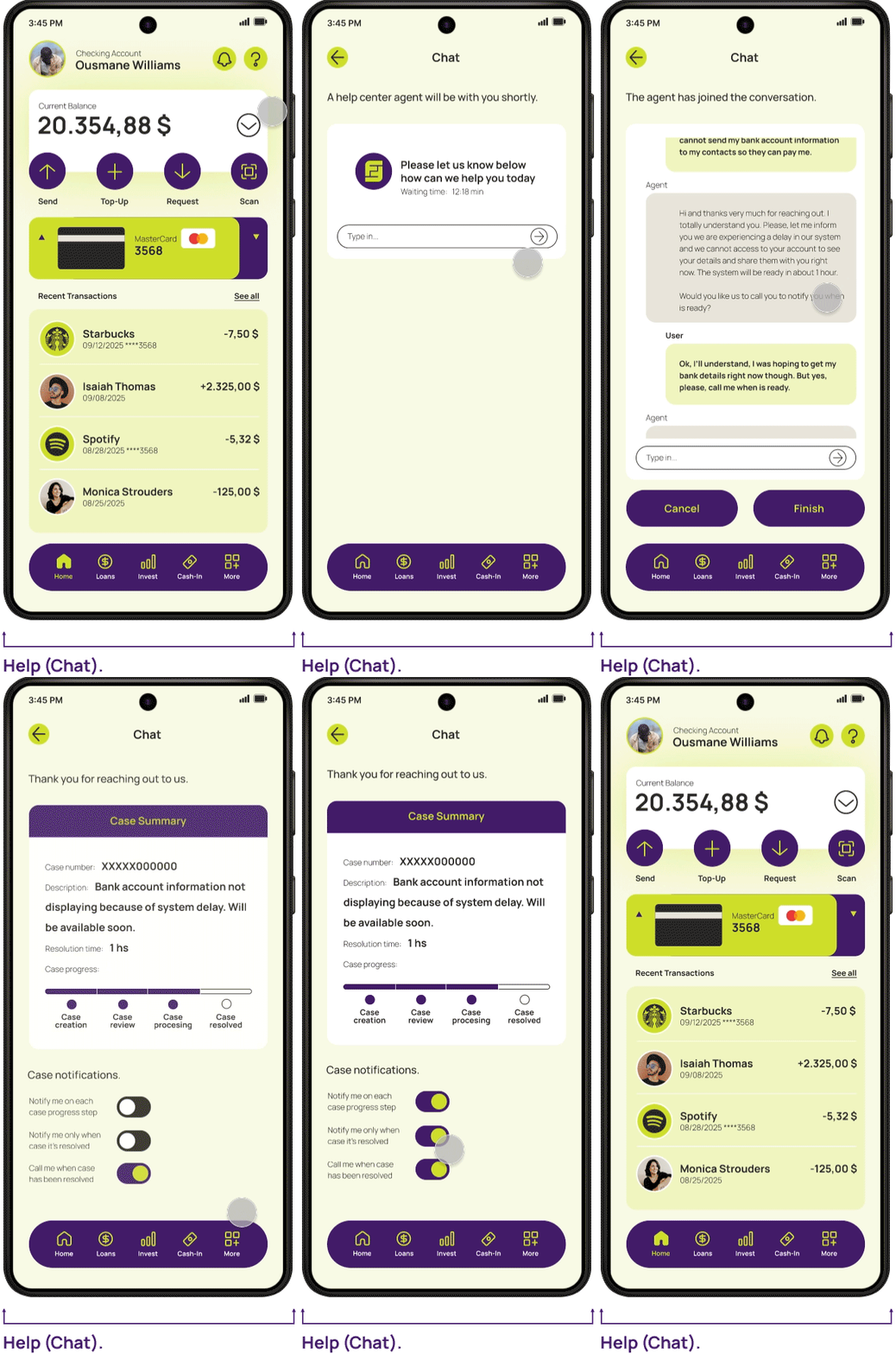
User flows were created to map how users would achieve main goals in the app. Below there’s a sample of the user flow of “Send” and “Help” goals.
4__Prototype Phase.
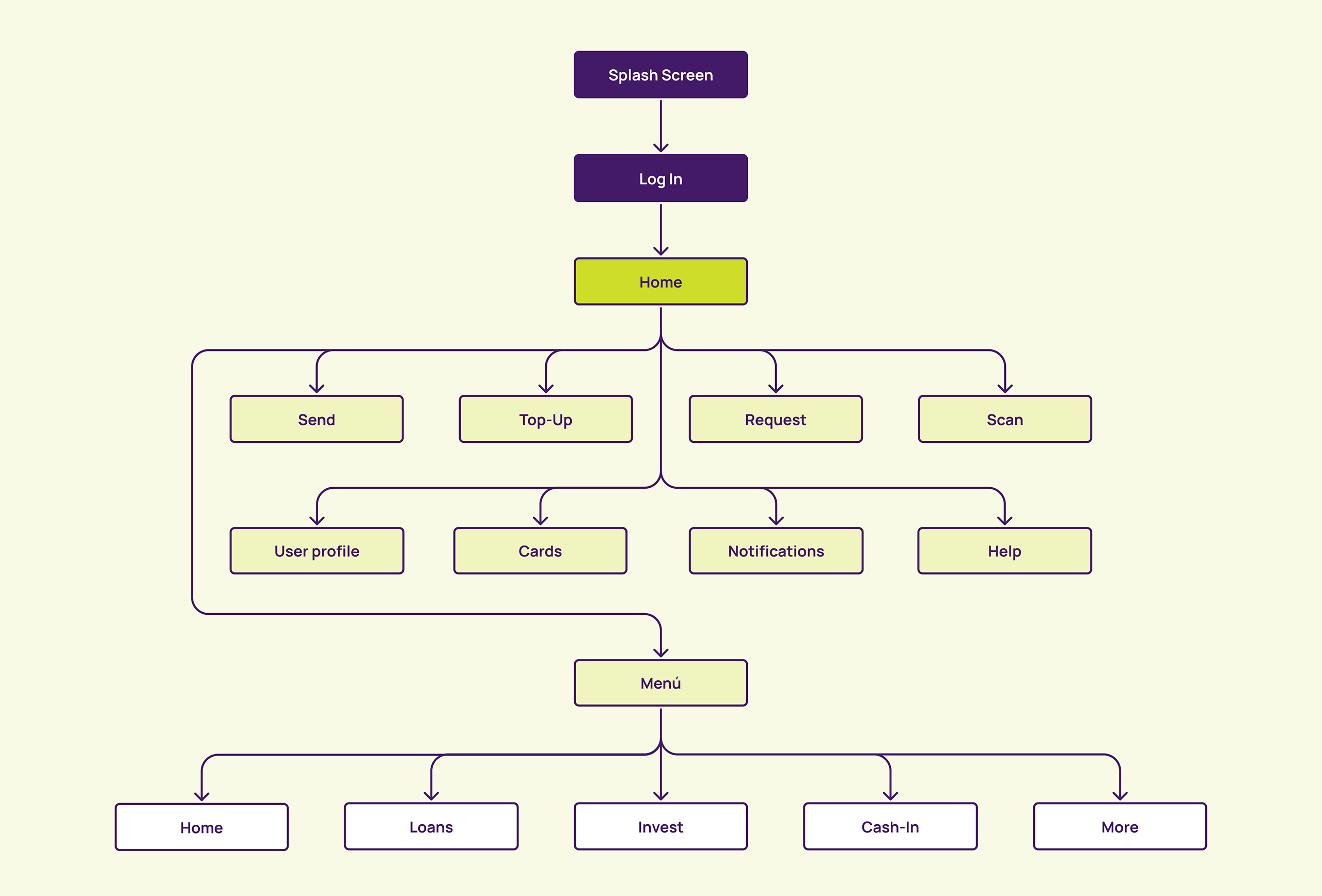
Primary Site Map.
The site map was created to design and built relationships between the main user tasks.
4__Prototype Phase.
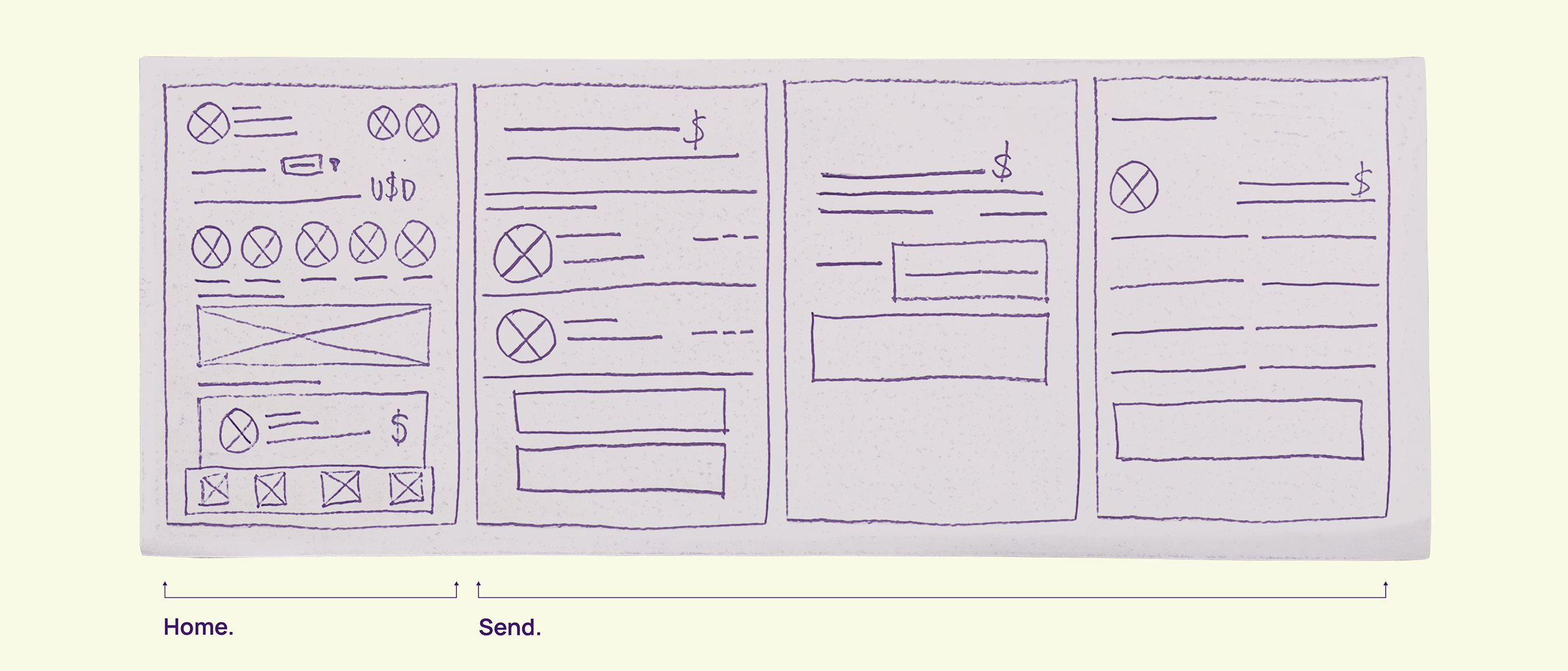
Paper Wireframes.
First ideas for the app were designed as paper wireframes to rapidly test concepts.
4__Prototype Phase.
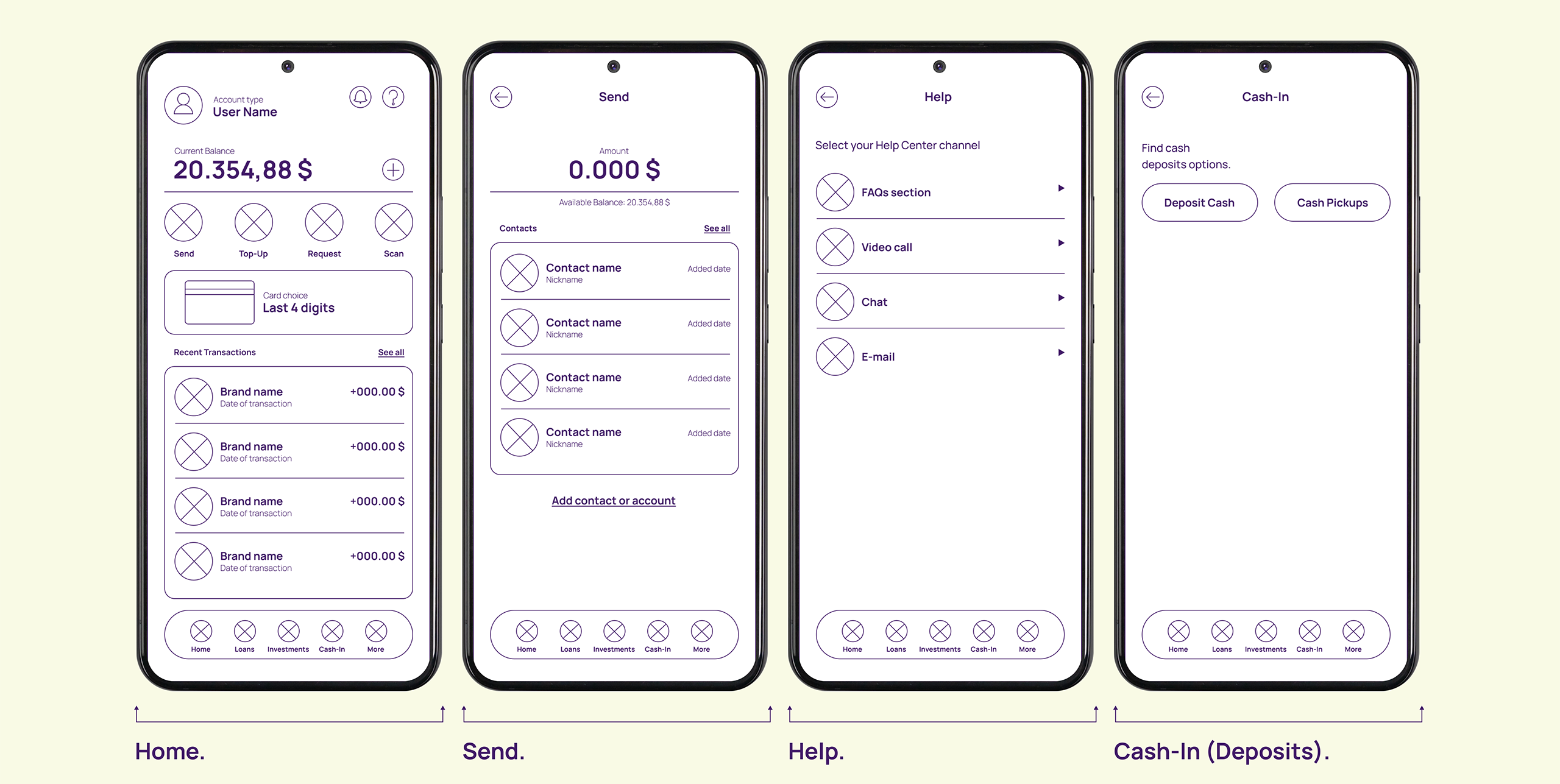
Digital Wireframes.
Then, the ideas were turned into digital wireframes for better understanding and to start the prototype process.
4__Prototype Phase.
Lo-Fi Prototype.
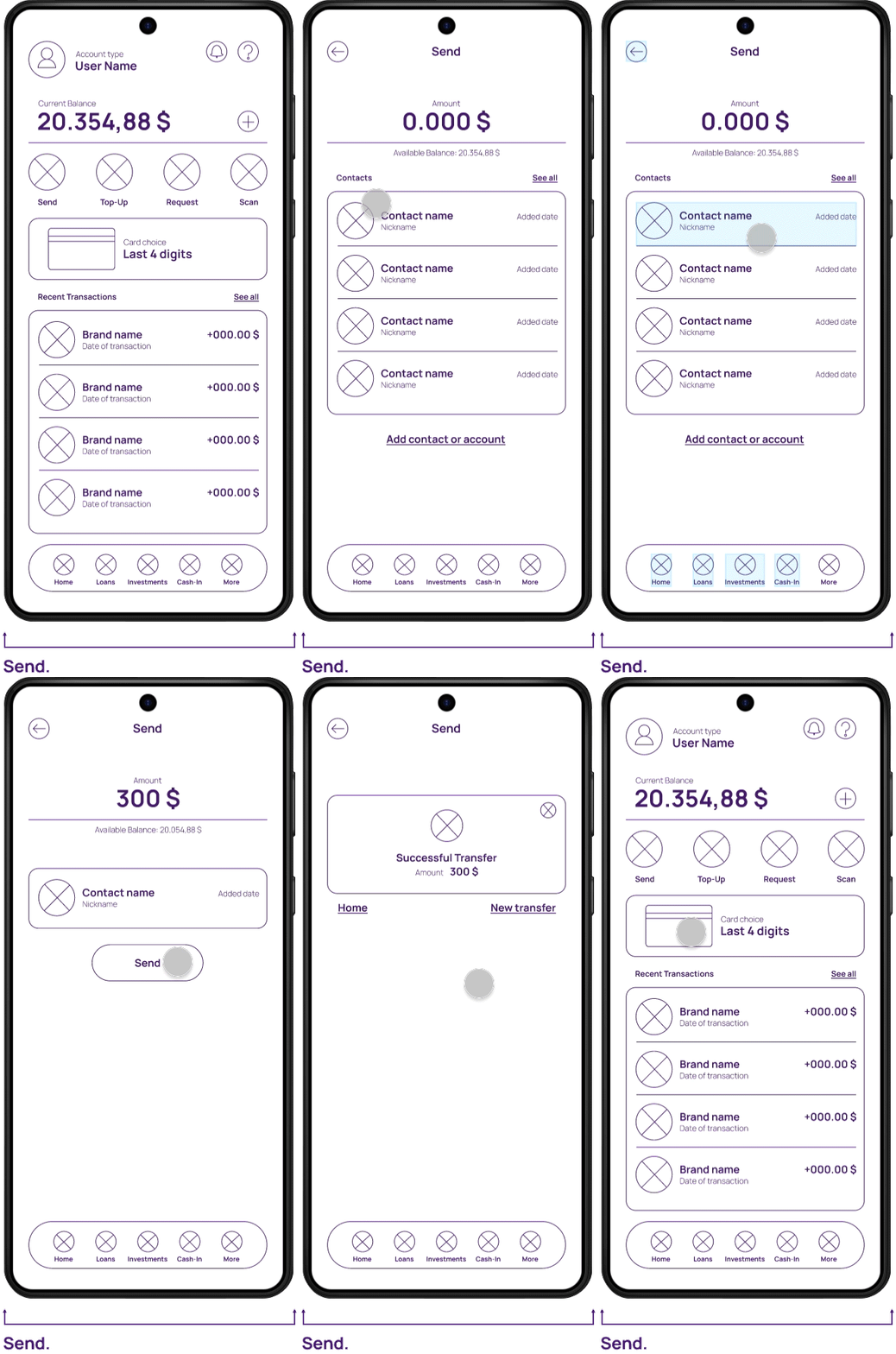
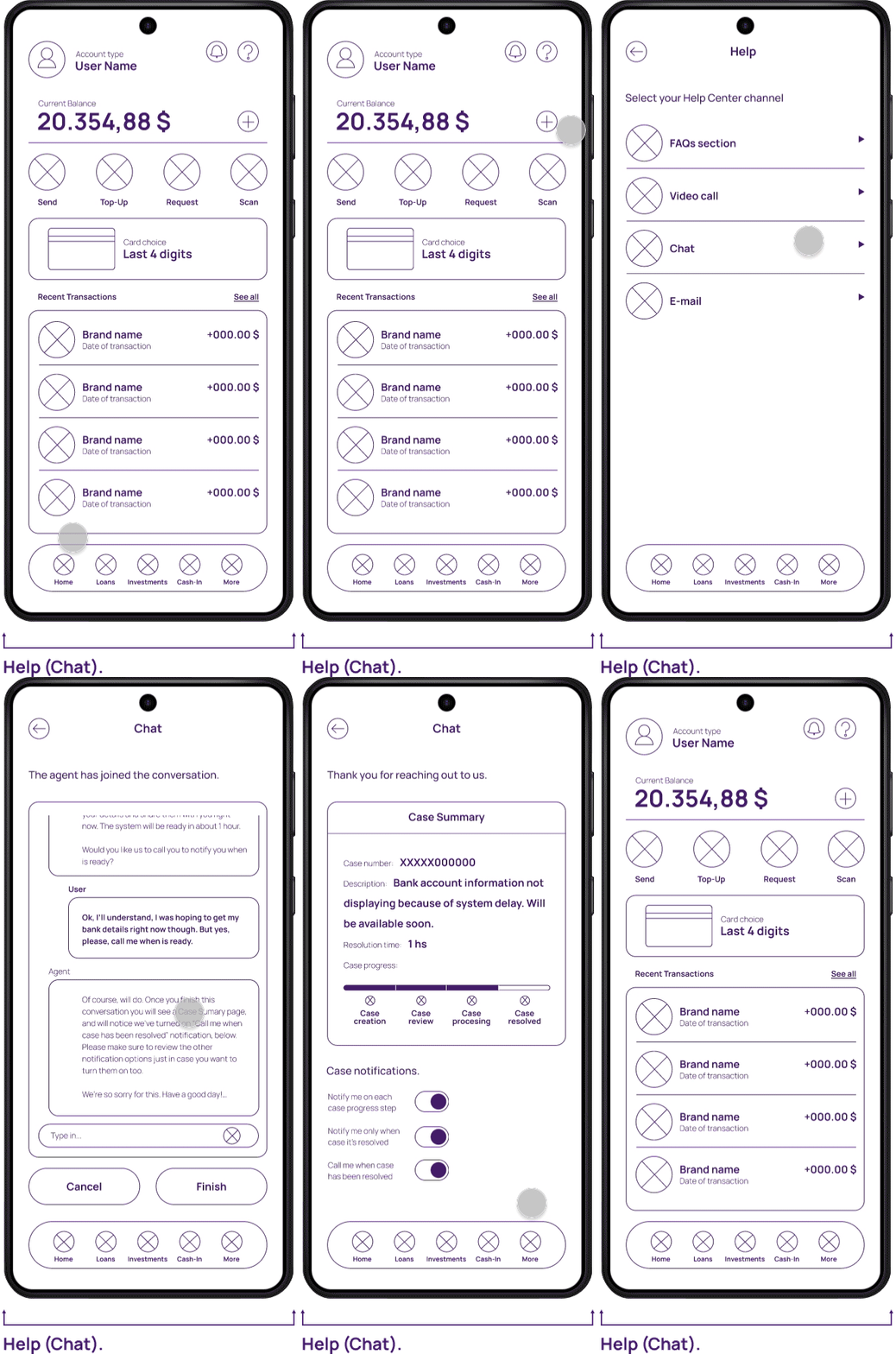
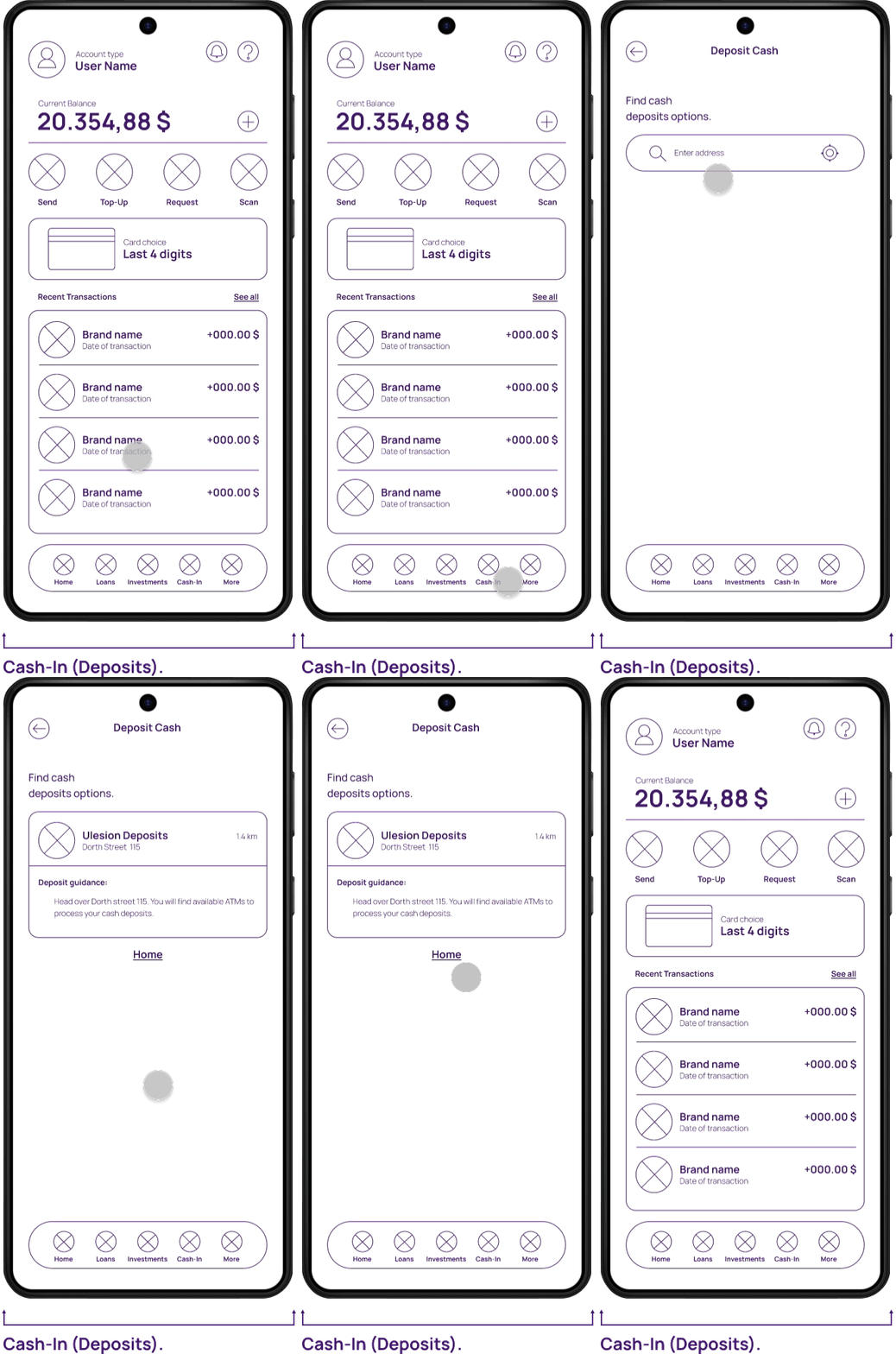
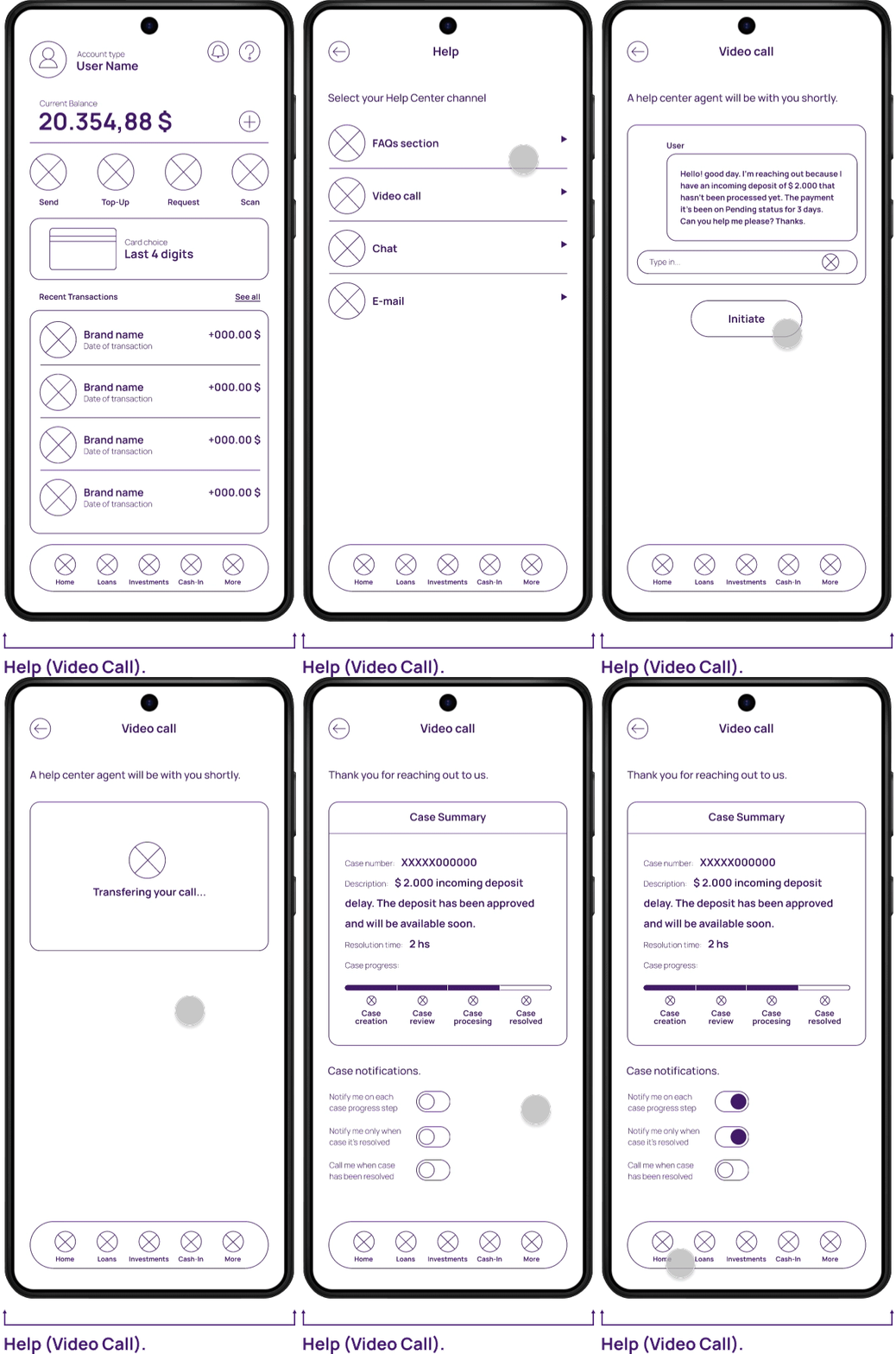
Main interactions and functionalities were added to the digital wireframes to create the low fidelity prototype needed to the test phase.
5__Test Phase.
Usability study (Unmoderated).
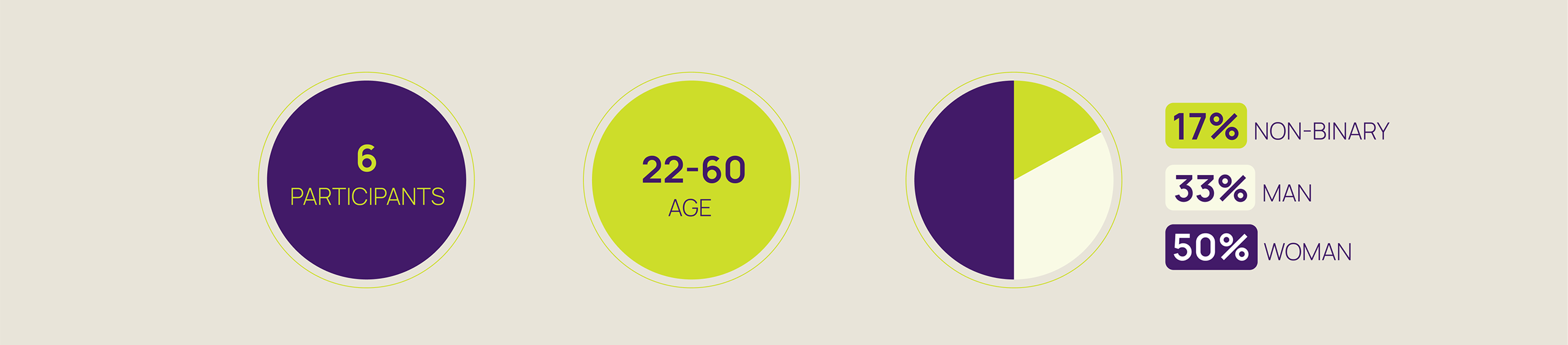
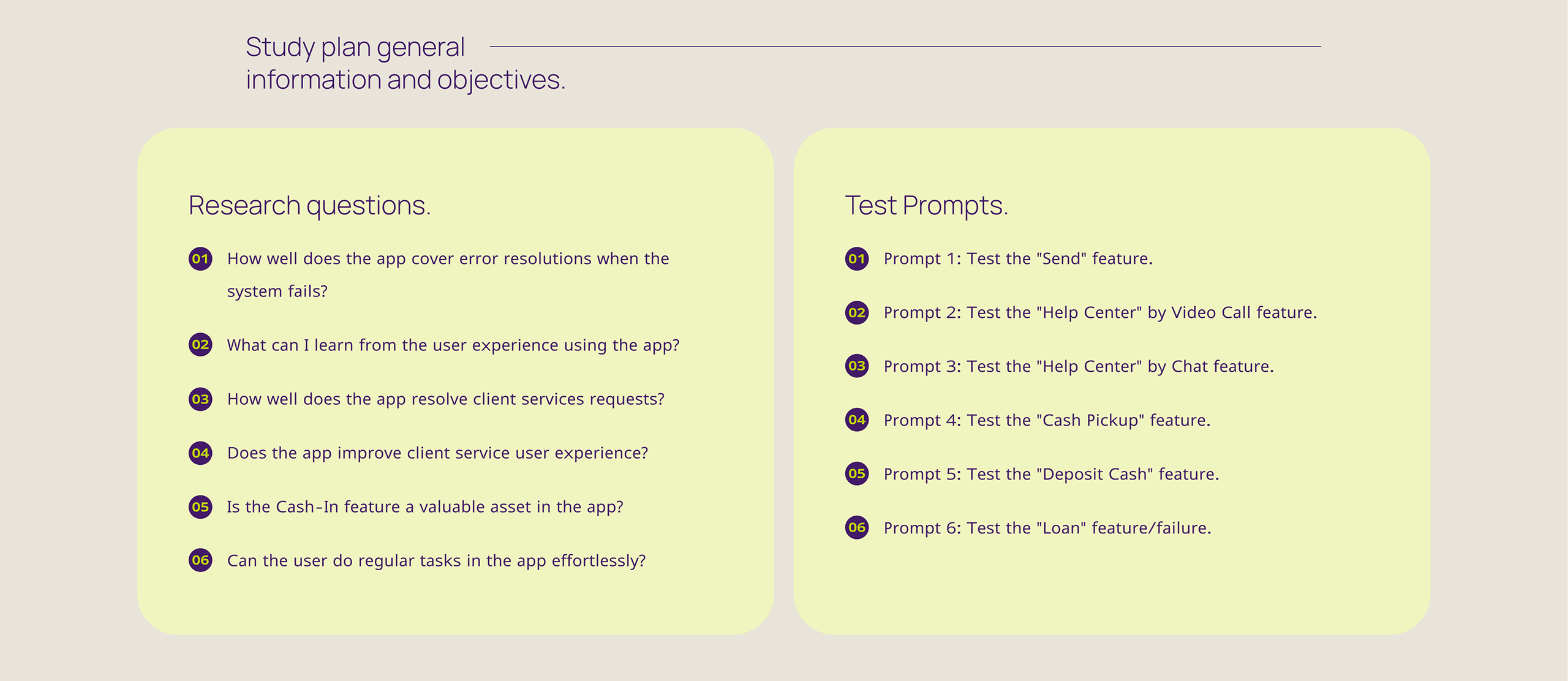
The study aimed to test the resulting prototype and discover any usability issues, to improve the product for better performance and resolution of user’s needs.
5__Test Phase.
Iteration.
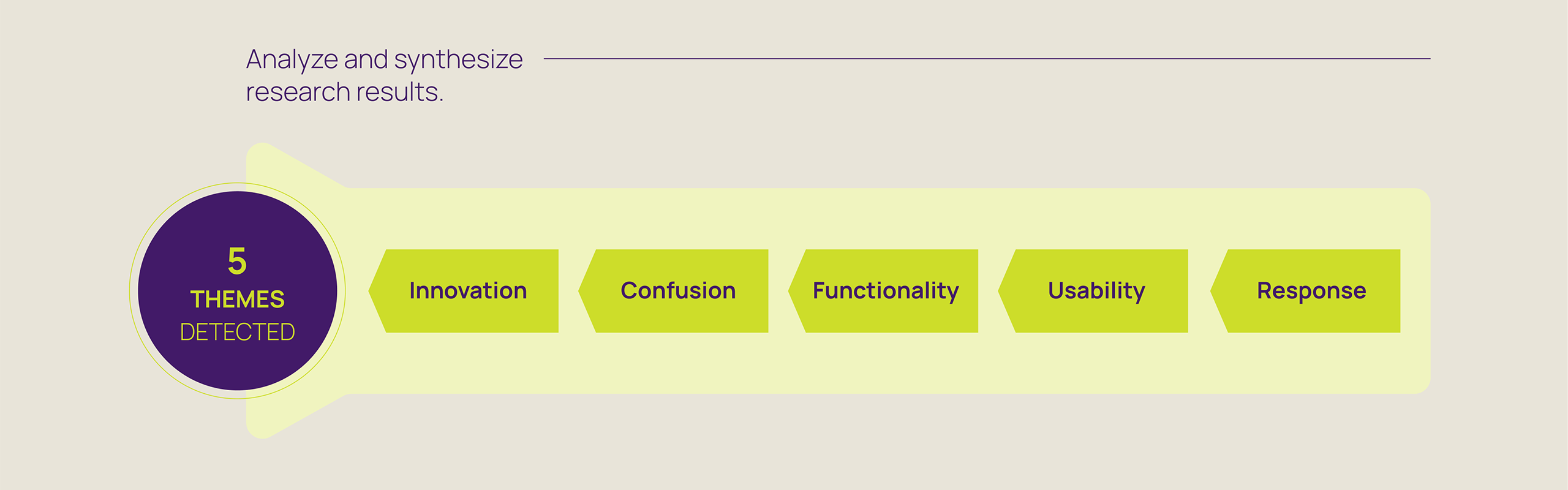
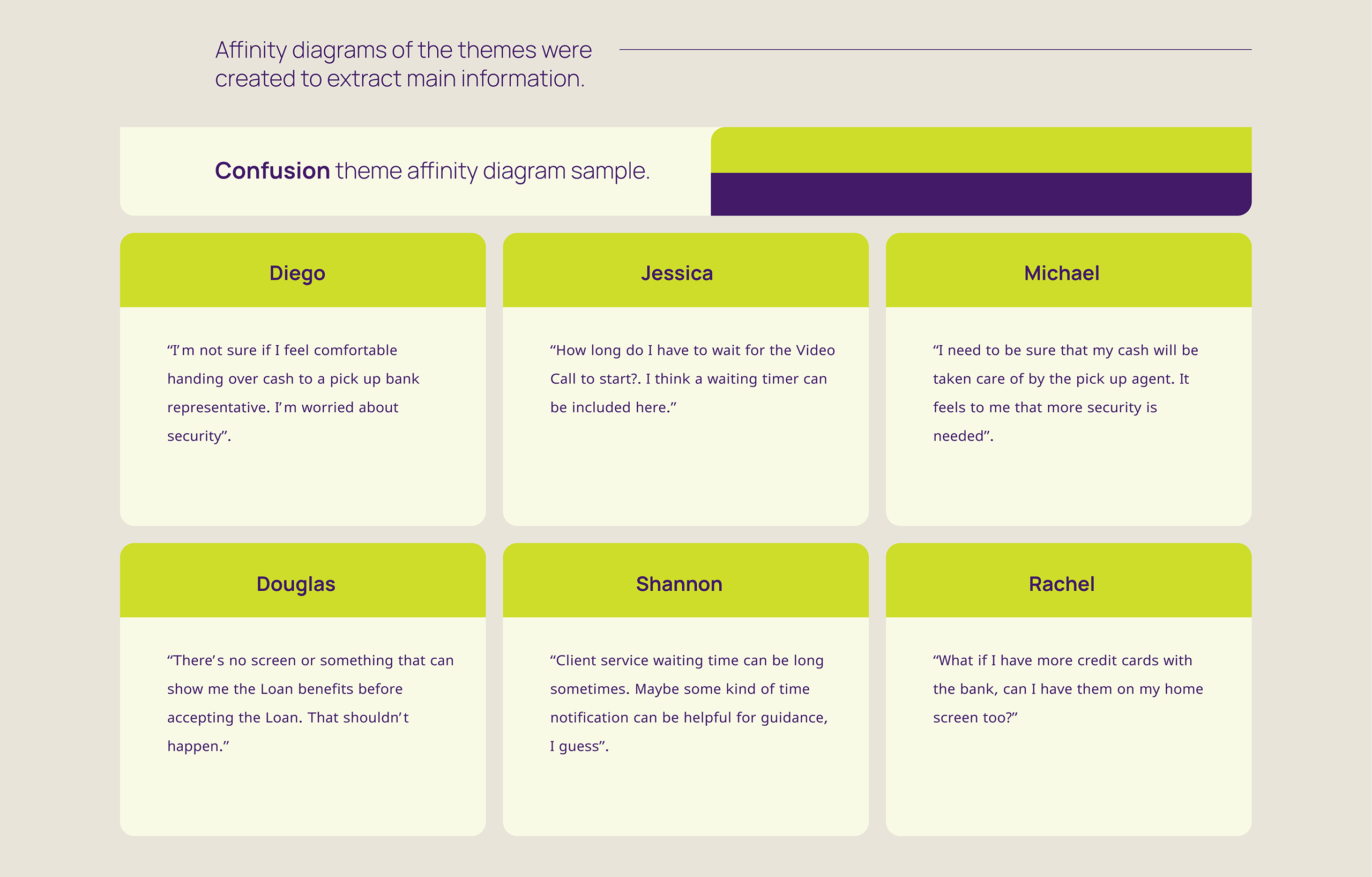
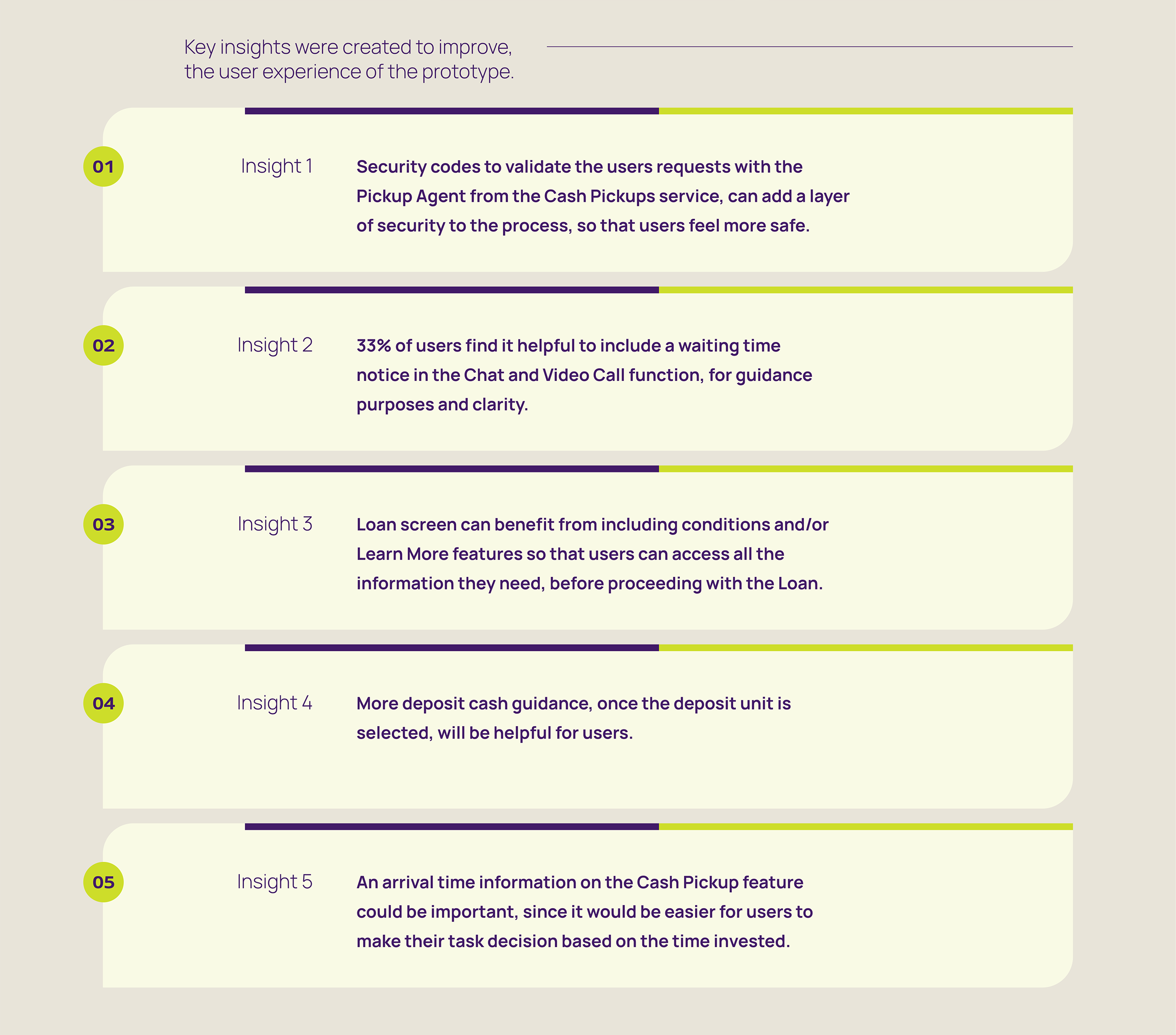
With the usability study completed, an iteration process began by analyzing important insights obtained that could allow, later on, to design an improved Hi-Fi version of the app.
Results.
Hi-Fi Prototype.
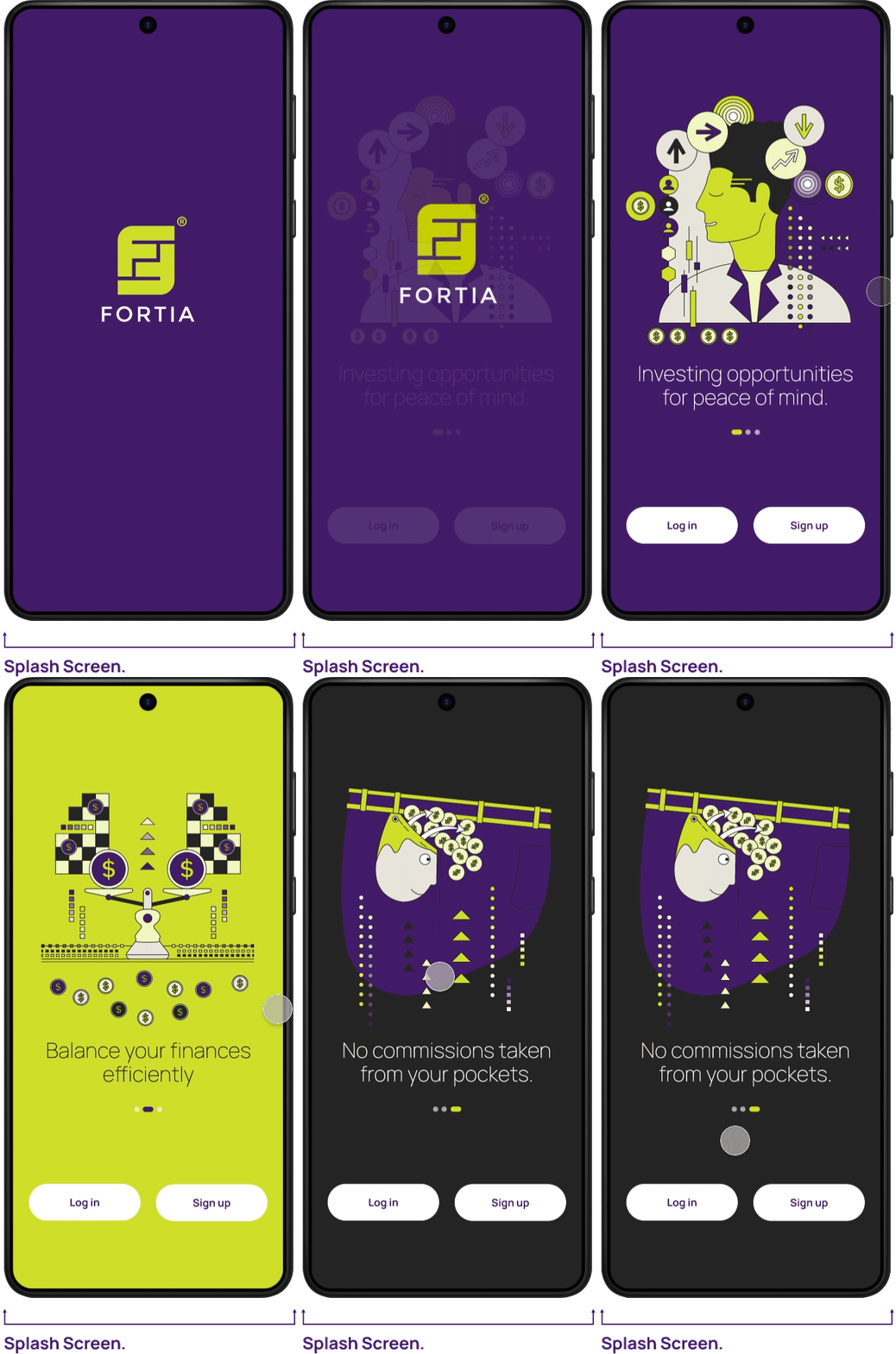
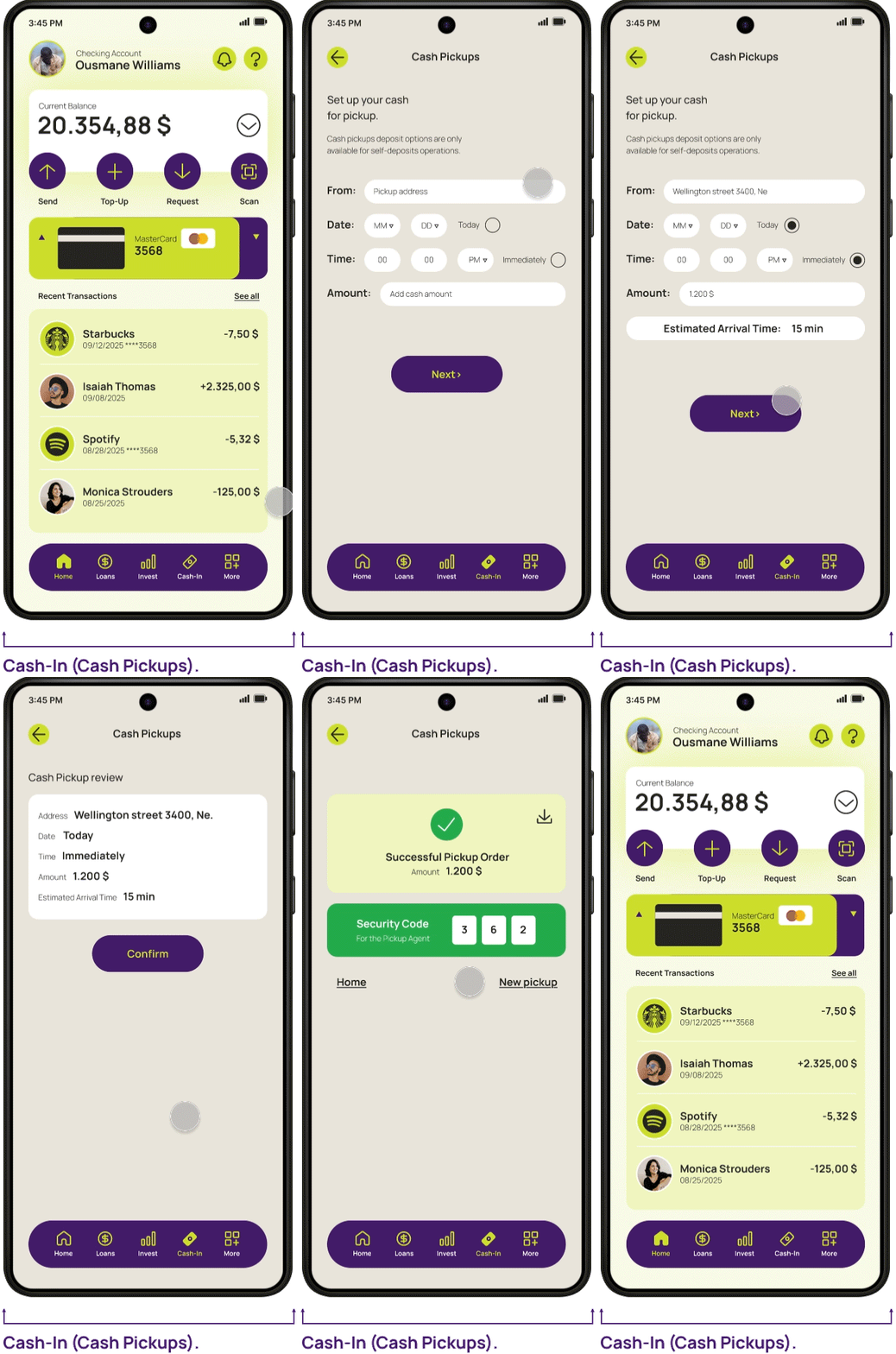
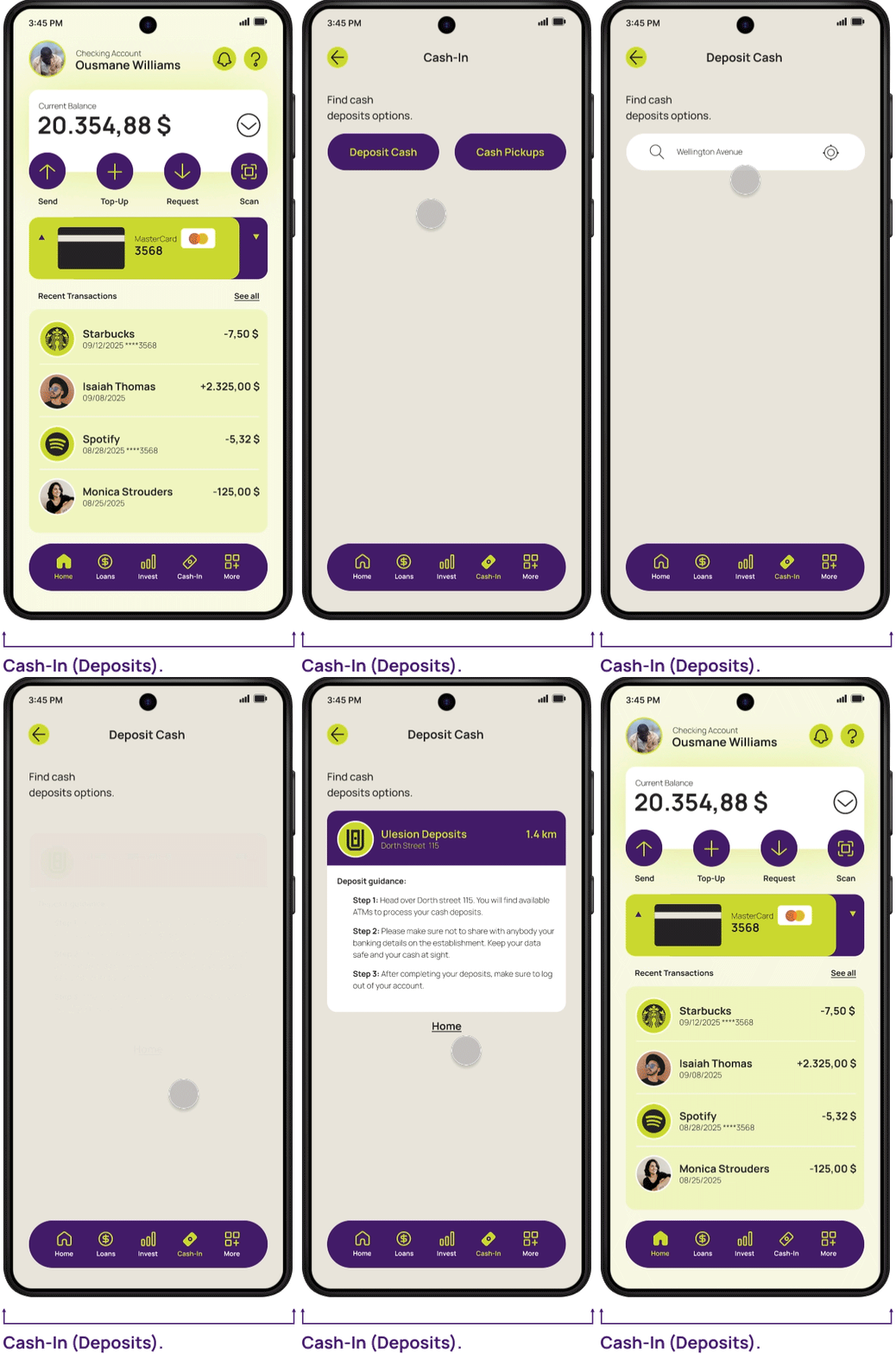
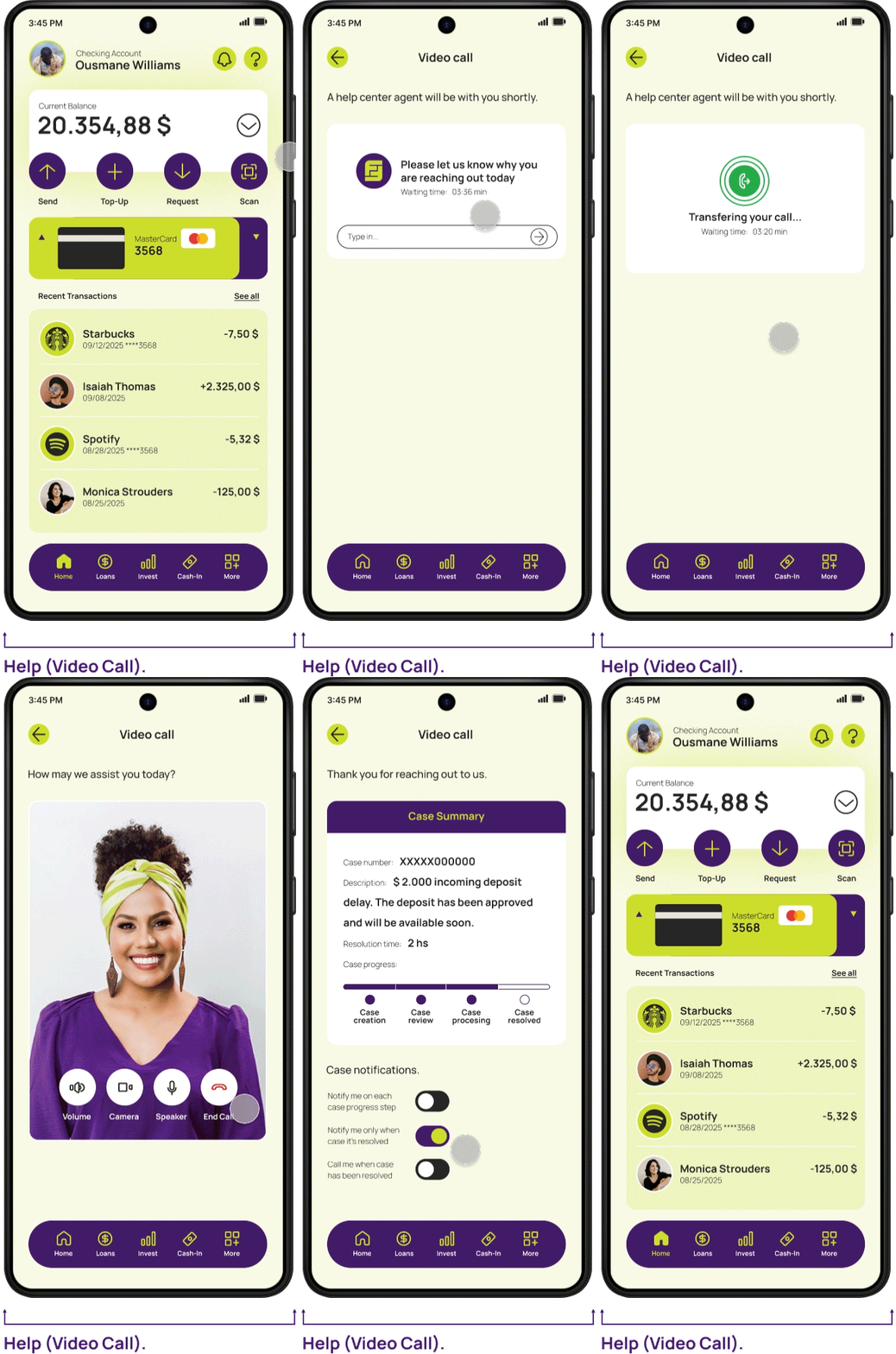
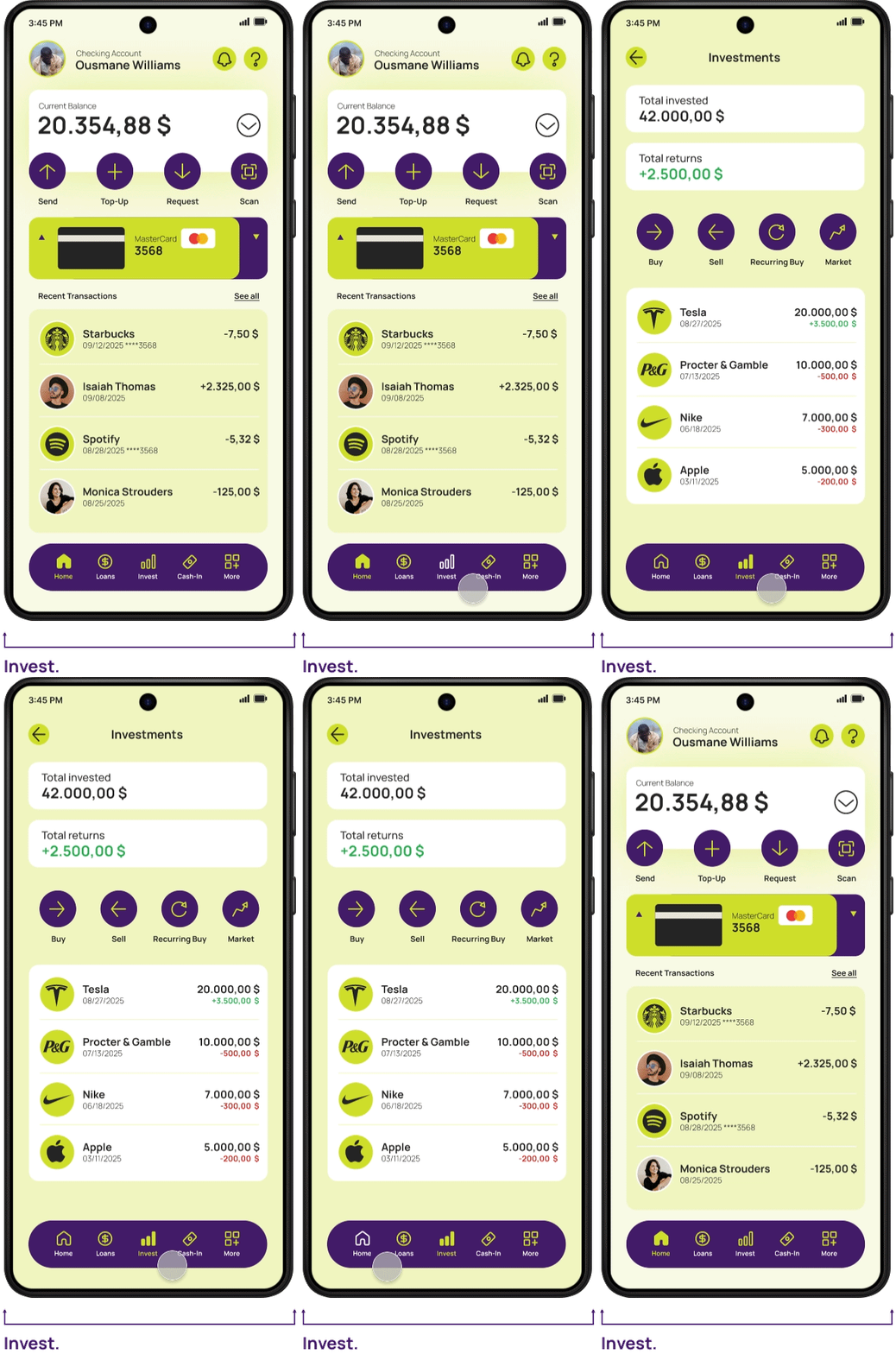
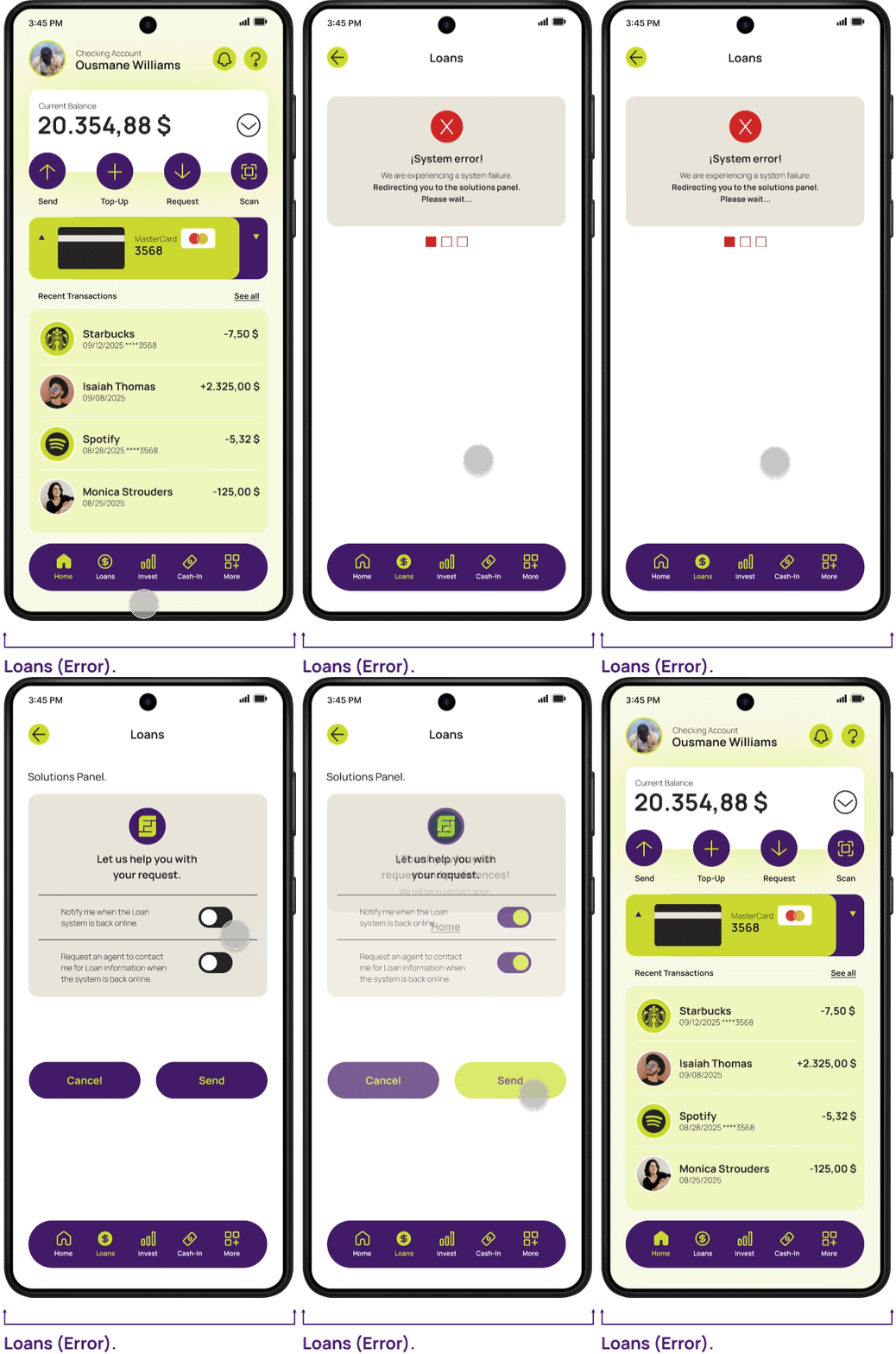
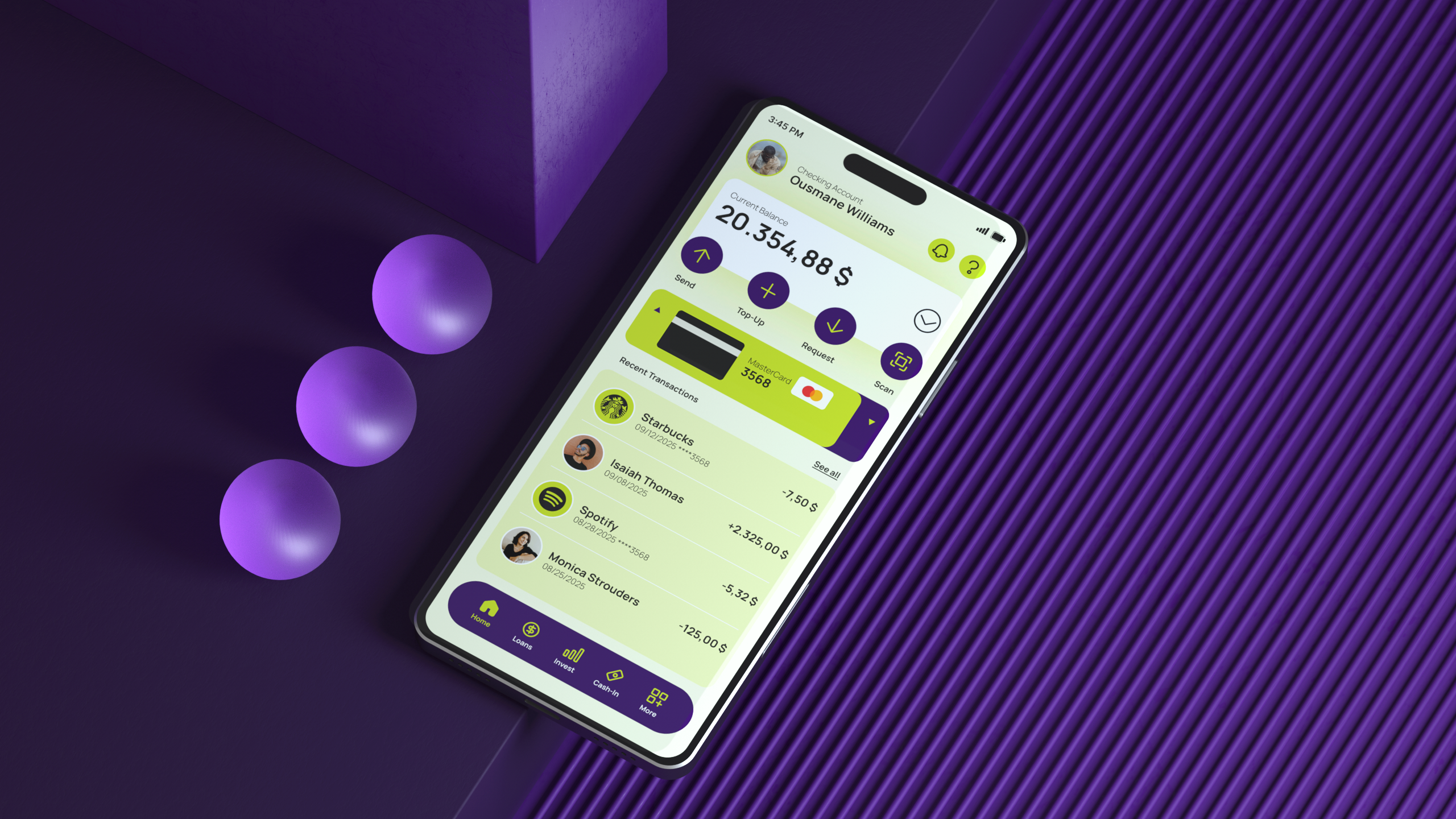
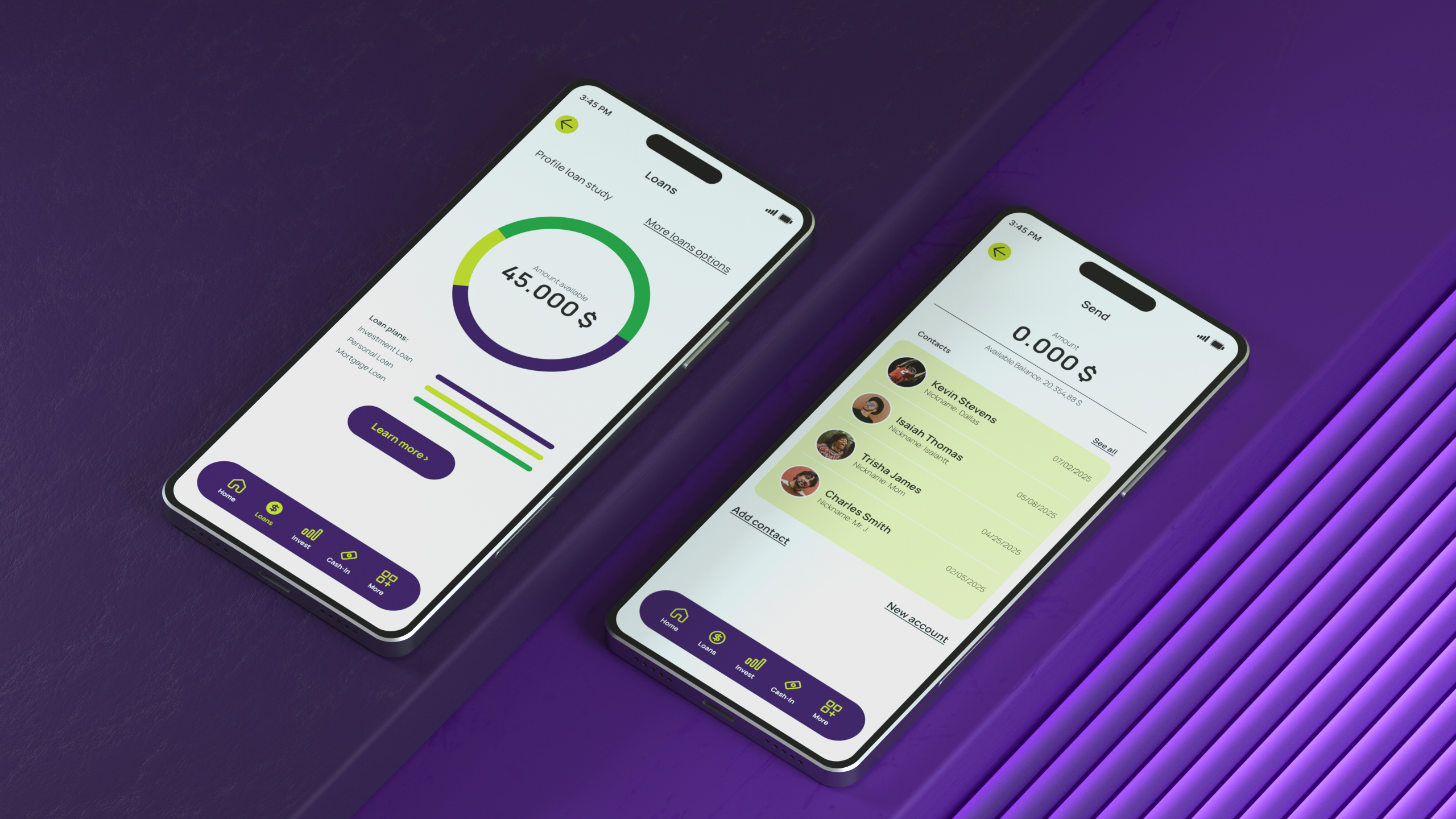
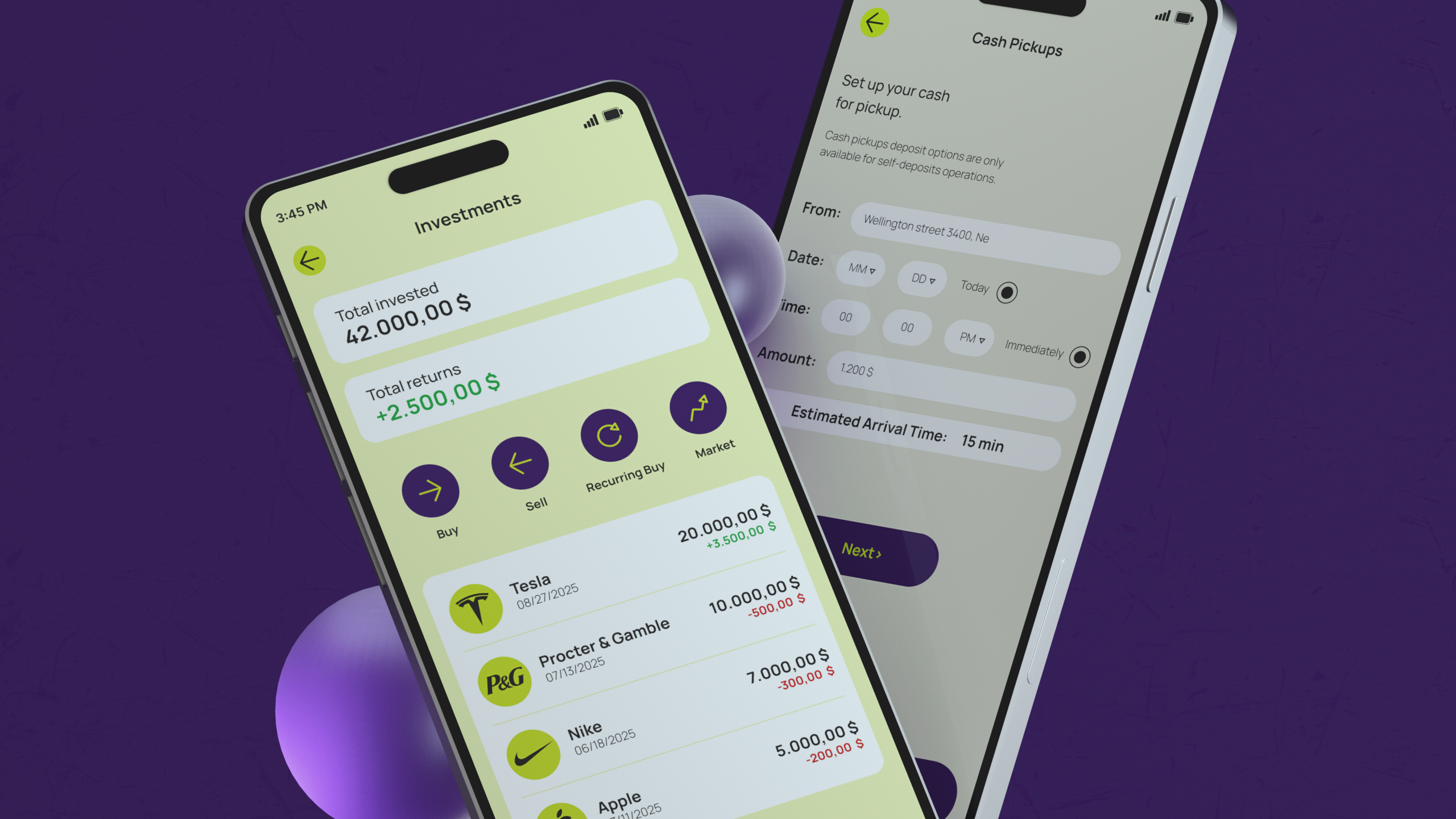
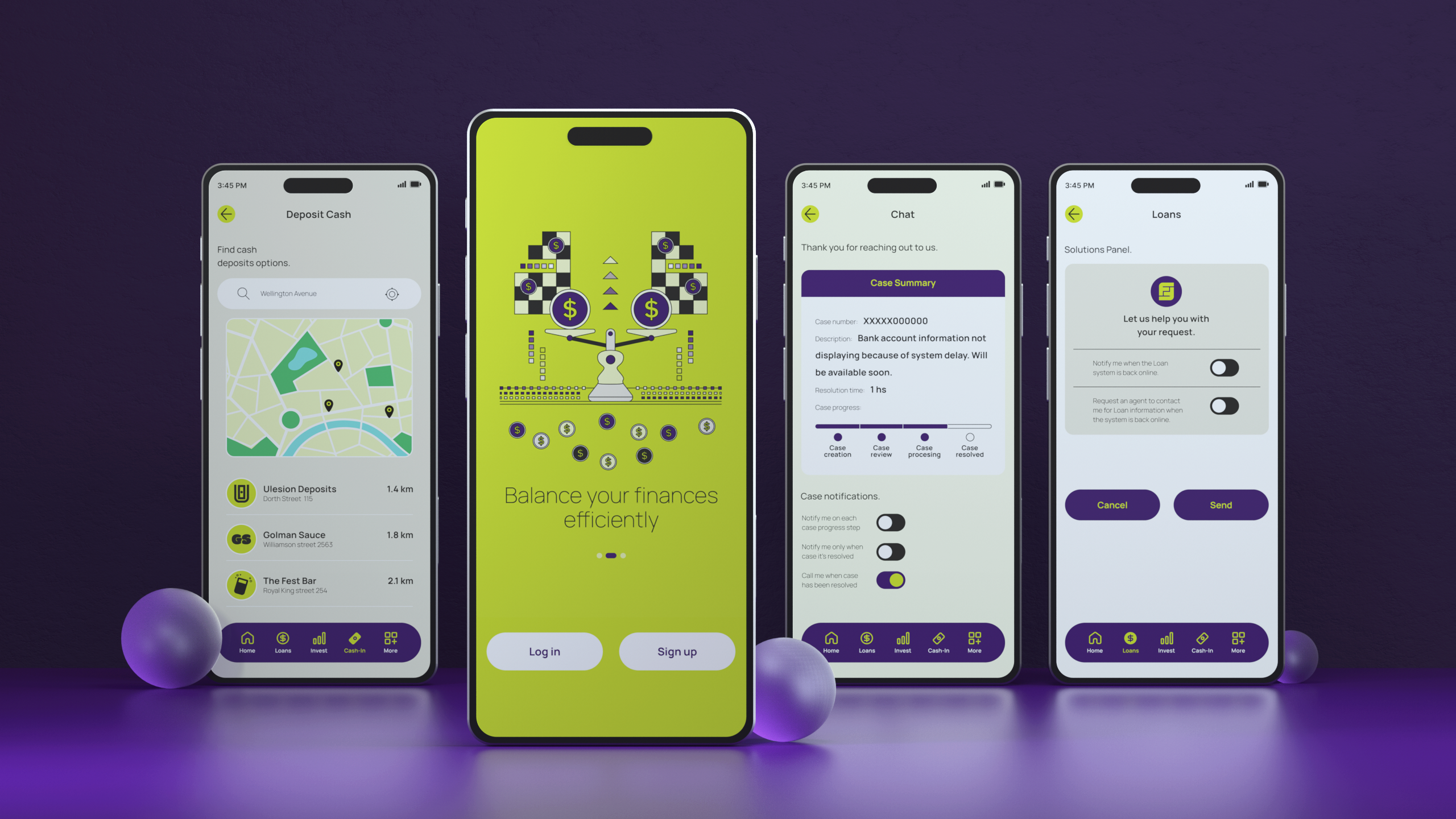
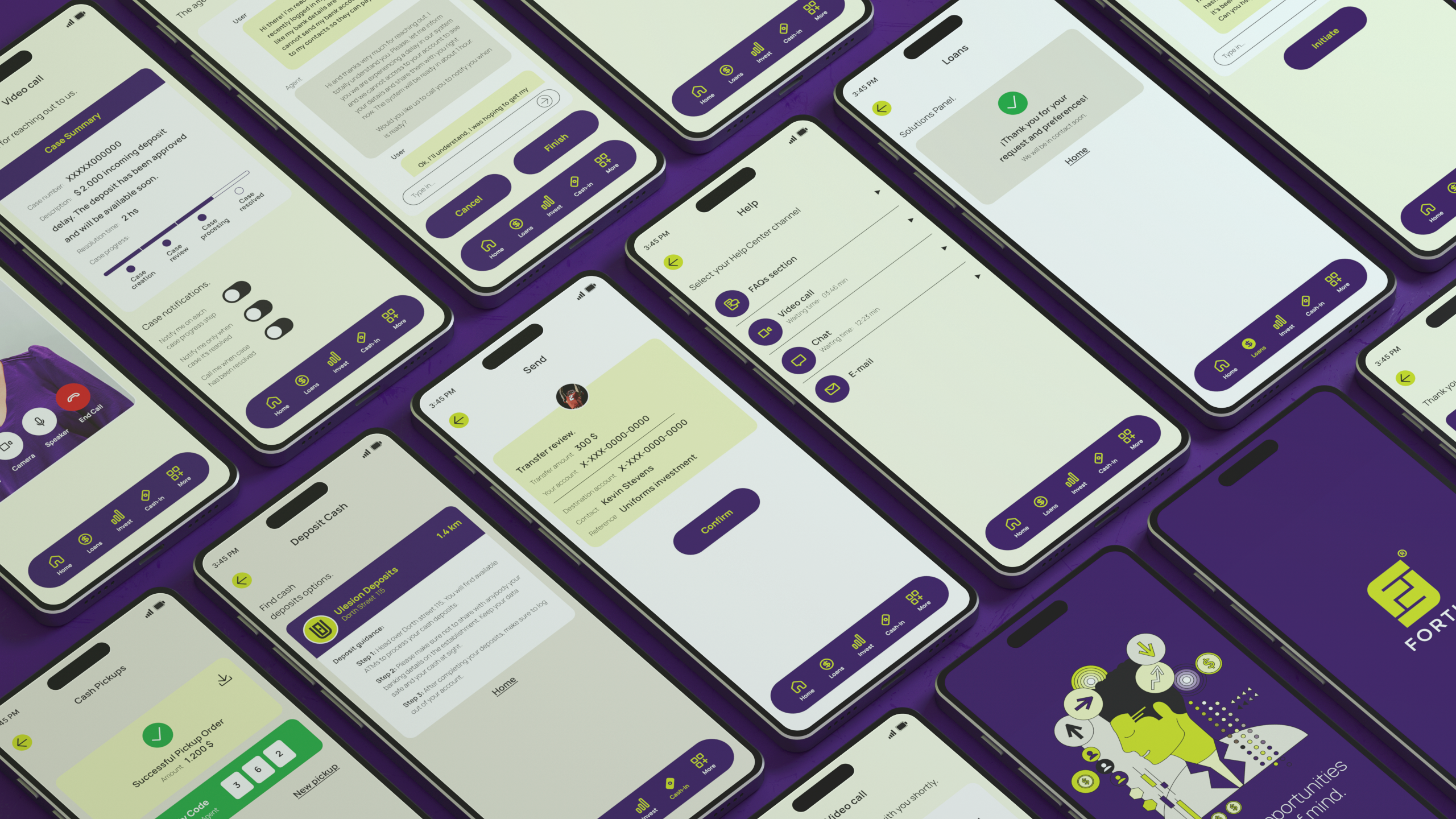
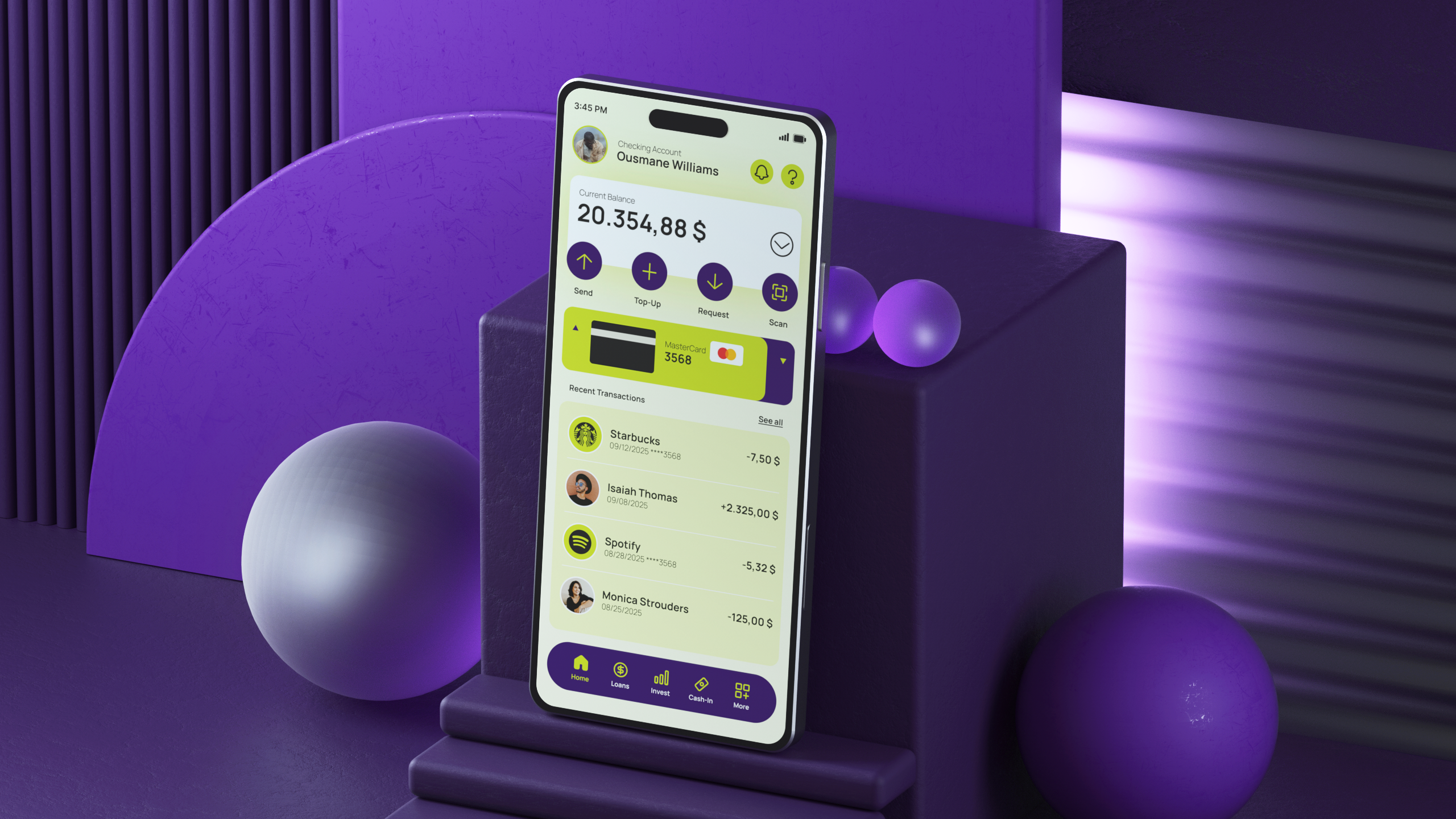
The Low-Fi prototype was improved, by including previous research findings, and then turned into a Hi-Fi Prototype that enhances user experience and truly addresses user’s digital banking needs.