

Project Overview:
Missing Tag was a digital product solution developed by Tribal DDB Argentina for Missing Children Argentina. The project transformed the world’s largest social network into a proactive search tool by integrating Facebook’s facial recognition algorithm to identify cold cases of missing children in user uploaded photos.
1__The Problem Statement.
The Challenge.
Missing Children Argentina’s core principle is: “A photo of a missing child is the shortest path to bringing them home.” However, traditional distribution relied on manual shares, which have a short lifespan in a user’s feed and require constant active effort from the community.
How might we automate the identification process by leveraging the 250 million photos uploaded daily to Facebook without requiring constant manual effort from users?
2__User & Technical Context.
The Technology.
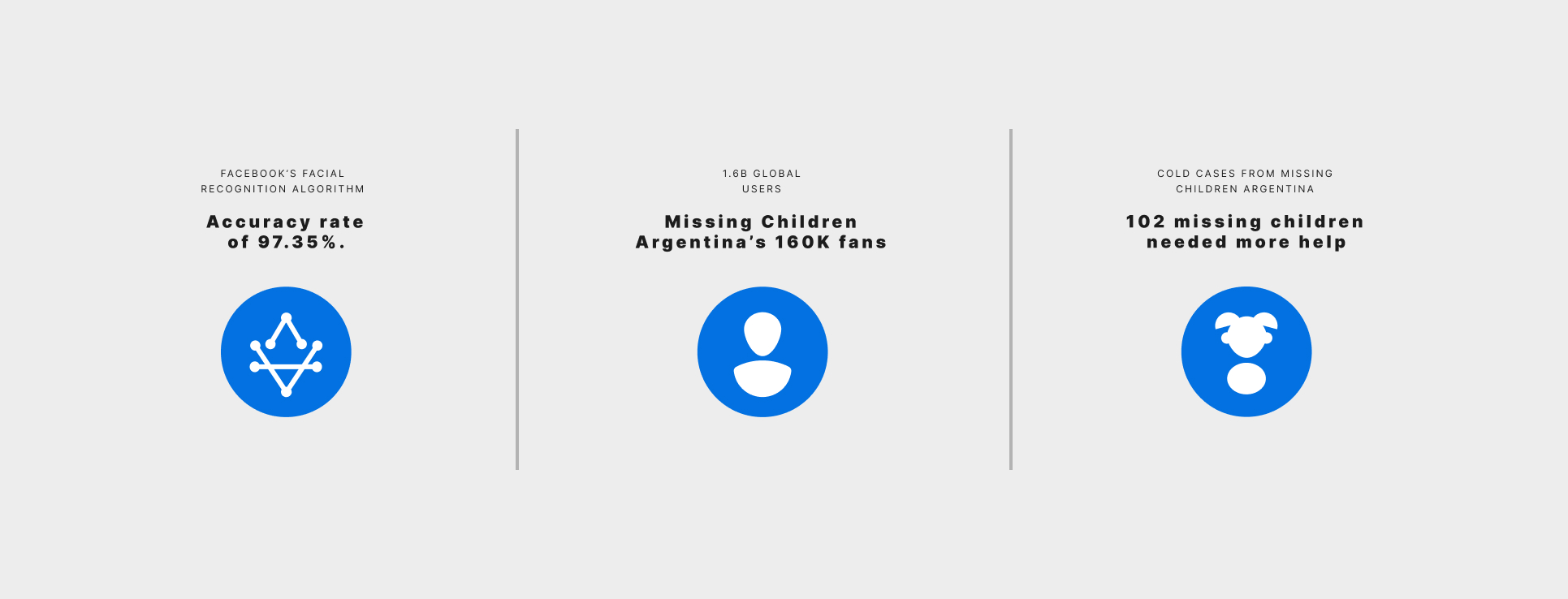
In 2016, Facebook’s facial recognition algorithm (DeepFace) reached an accuracy rate of 97.35%.
2__User & Technical Context.
The User Base.
While 1.6B global users provided a massive, untapped database of “passive searchers,” we strategically focused on Missing Children Argentina’s 160K Facebook fans as the initial catalyst for the implementation.
2__User & Technical Context.
The Data.
We were given 102 cold cases from Missing Children Argentina (cases where children had been missing for months or years, where traditional search methods had failed).
3__The Product Solution: “Missing Tag”.
Identity Creation.
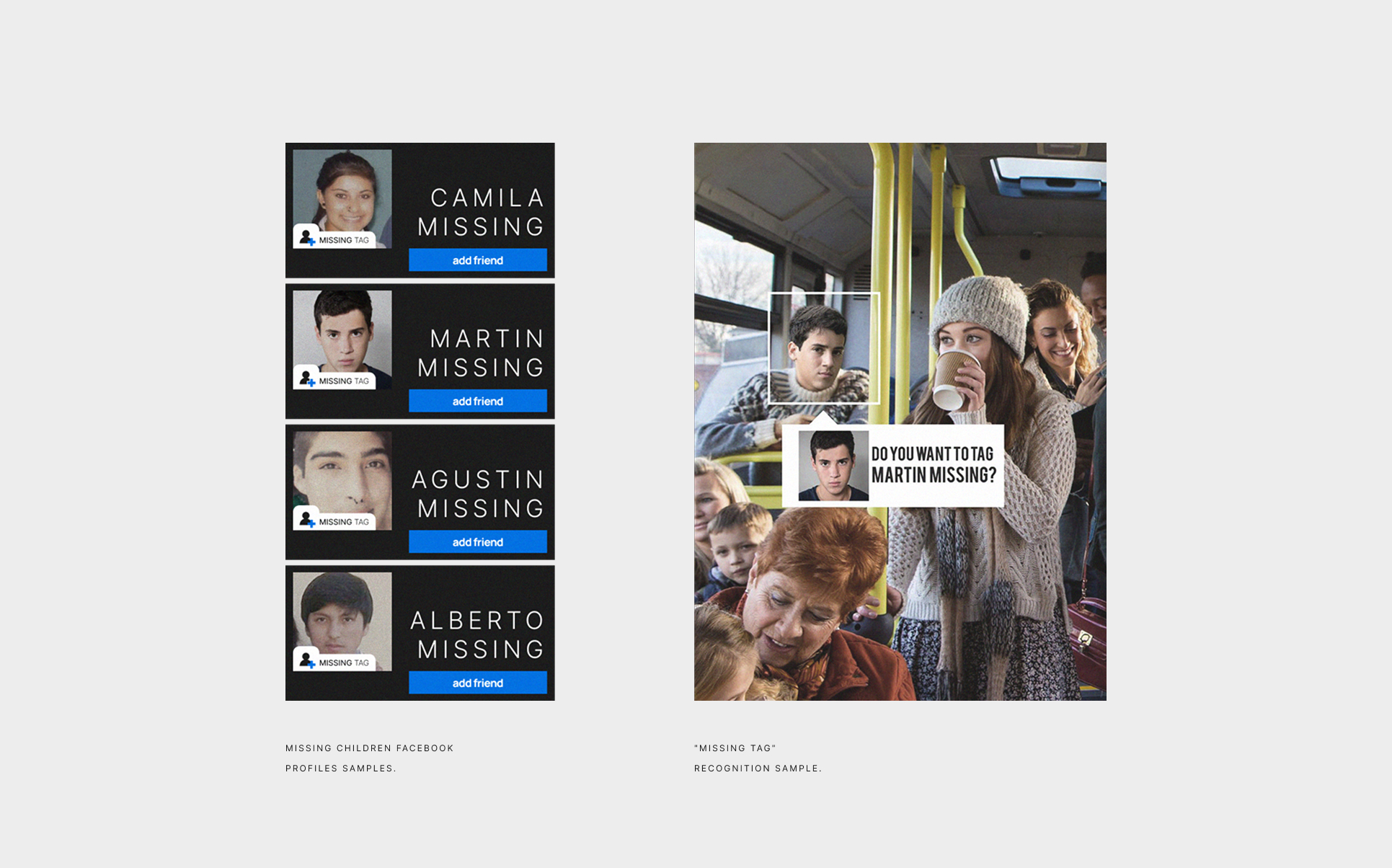
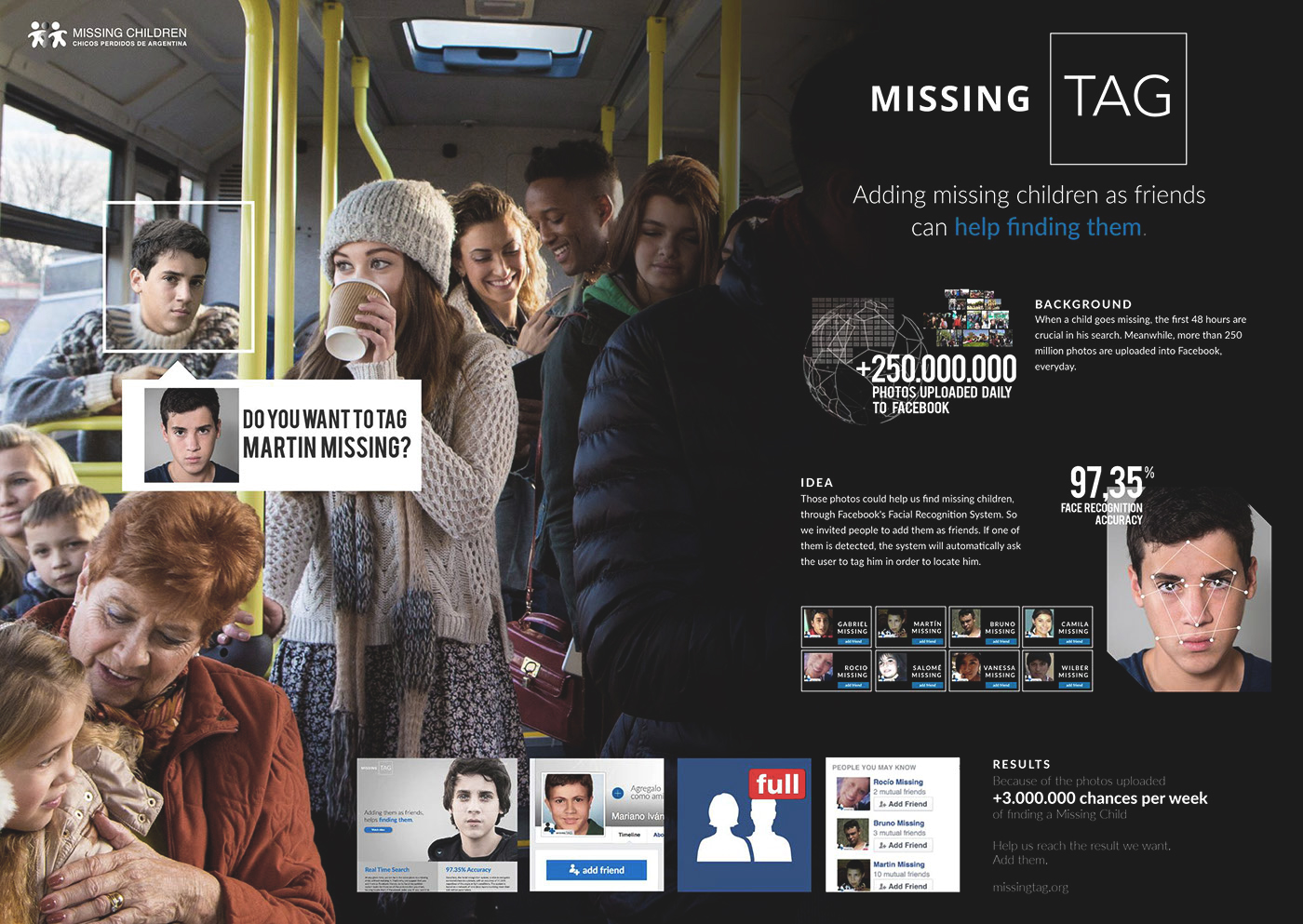
We designed a system that turned passive social media users into active (yet automated) search agents through a specific “Friendship” loop. We created individual Facebook profiles for the 102 missing children.
3__The Product Solution: “Missing Tag”.
The Funnel.
Users visited our web platform to browse cases and add these profiles as “Friends”.
3__The Product Solution: “Missing Tag”.
Automated Detection.
Once connected, Facebook’s algorithm scanned photos uploaded by the user. If a child appeared in the background of any photo, the system suggested a “Tag,” instantly notifying the organization of the potential location.
4__Design Process.
Strategic UI Design.
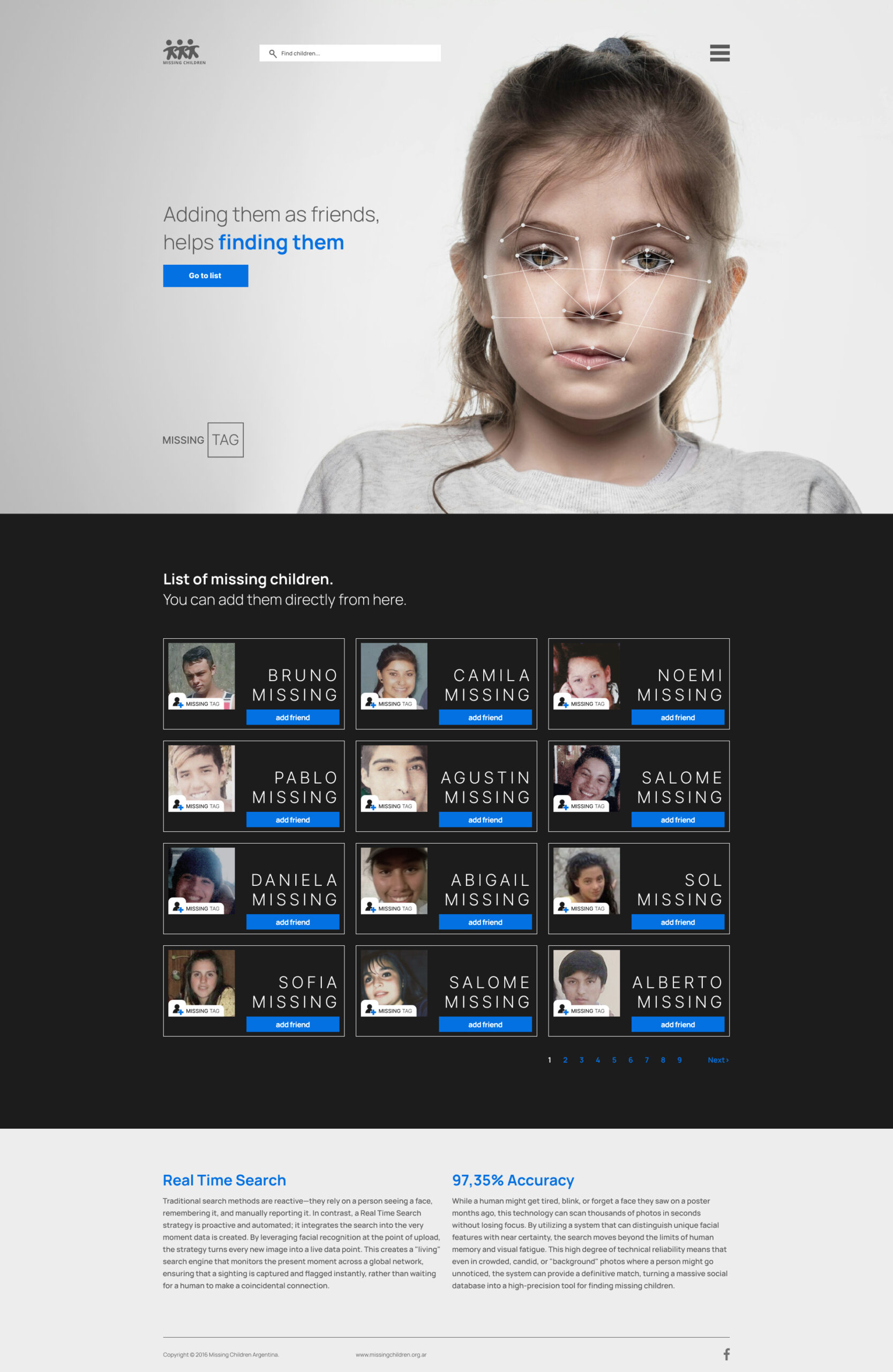
The website acted as the primary conversion engine.
4__Design Process.
Friction Reduction.
I designed a streamlined interface to minimize the steps between landing on the site and performing the “Add Friend” action.
4__Design Process.
Information Architecture.
Organized the 102 cases to ensure visibility for long term missing children, using a grid based system that prioritized facial clarity.
4__Design Process.
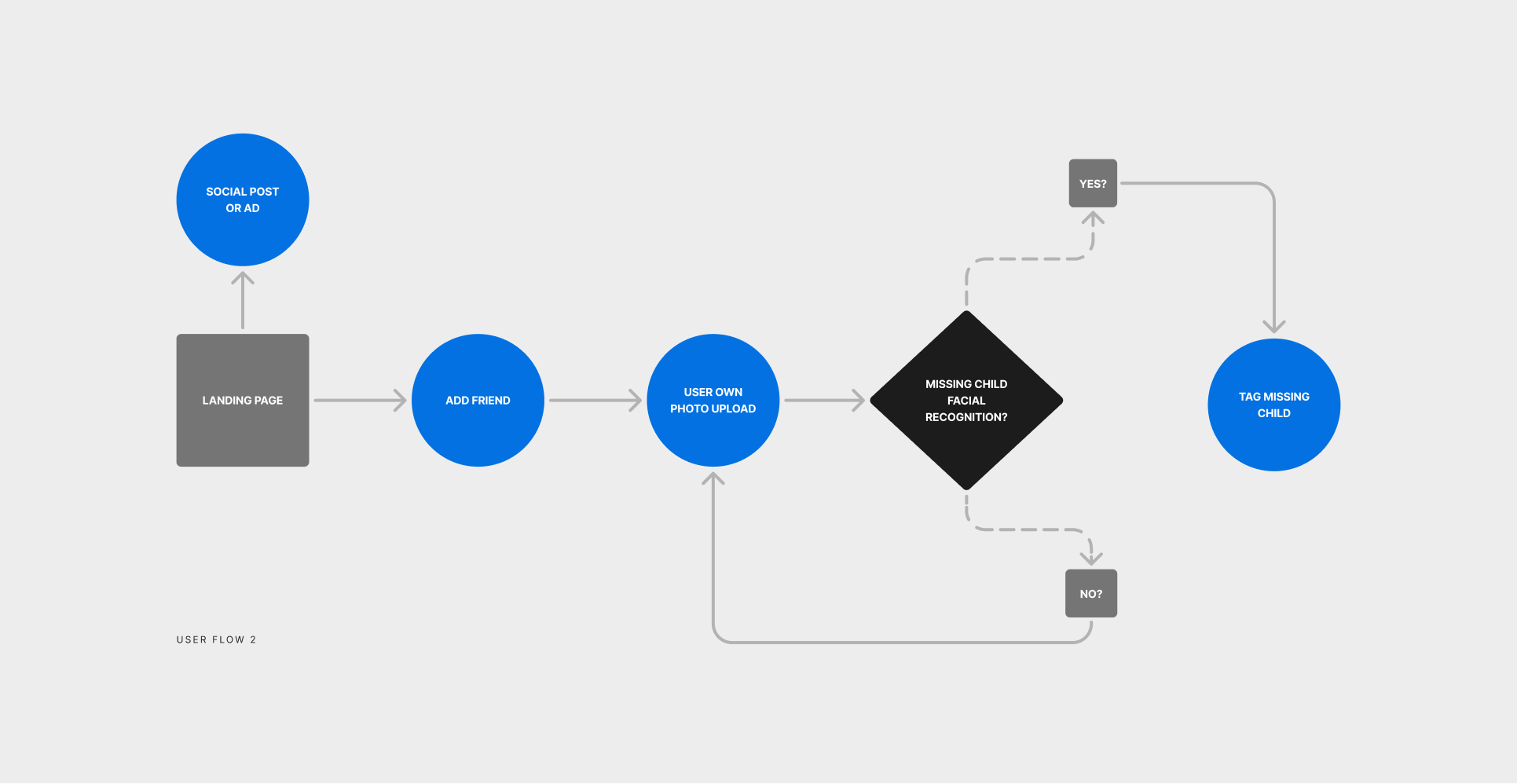
User Flow & Interaction Mapping.
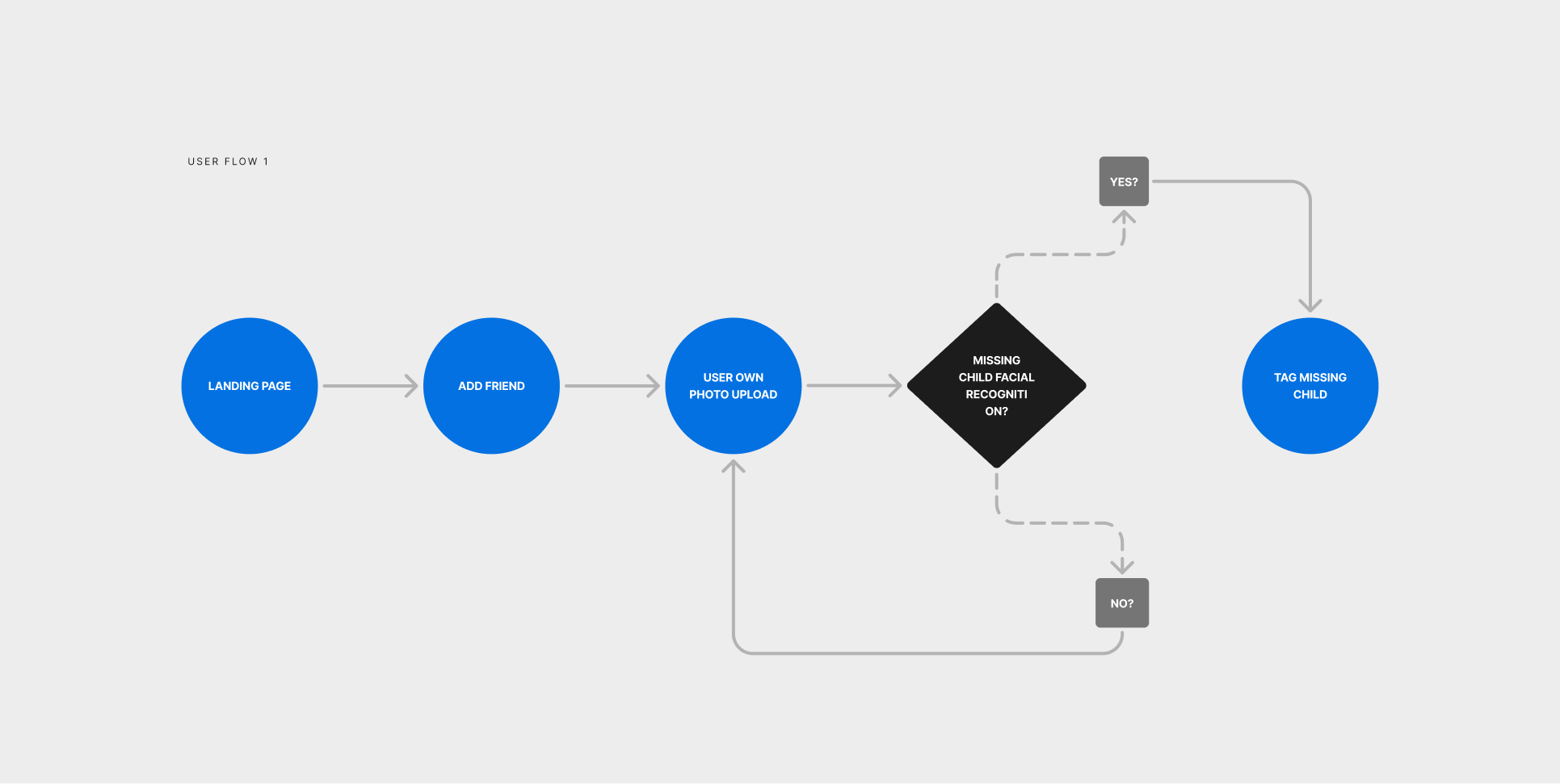
To ensure the technical team and stakeholders understood the integration between our web platform and Facebook’s API, I mapped the end to end journey. The goal was to visualize how a simple user action triggered a complex automated search.
4__Design Process.
Key Visual & System Identity.
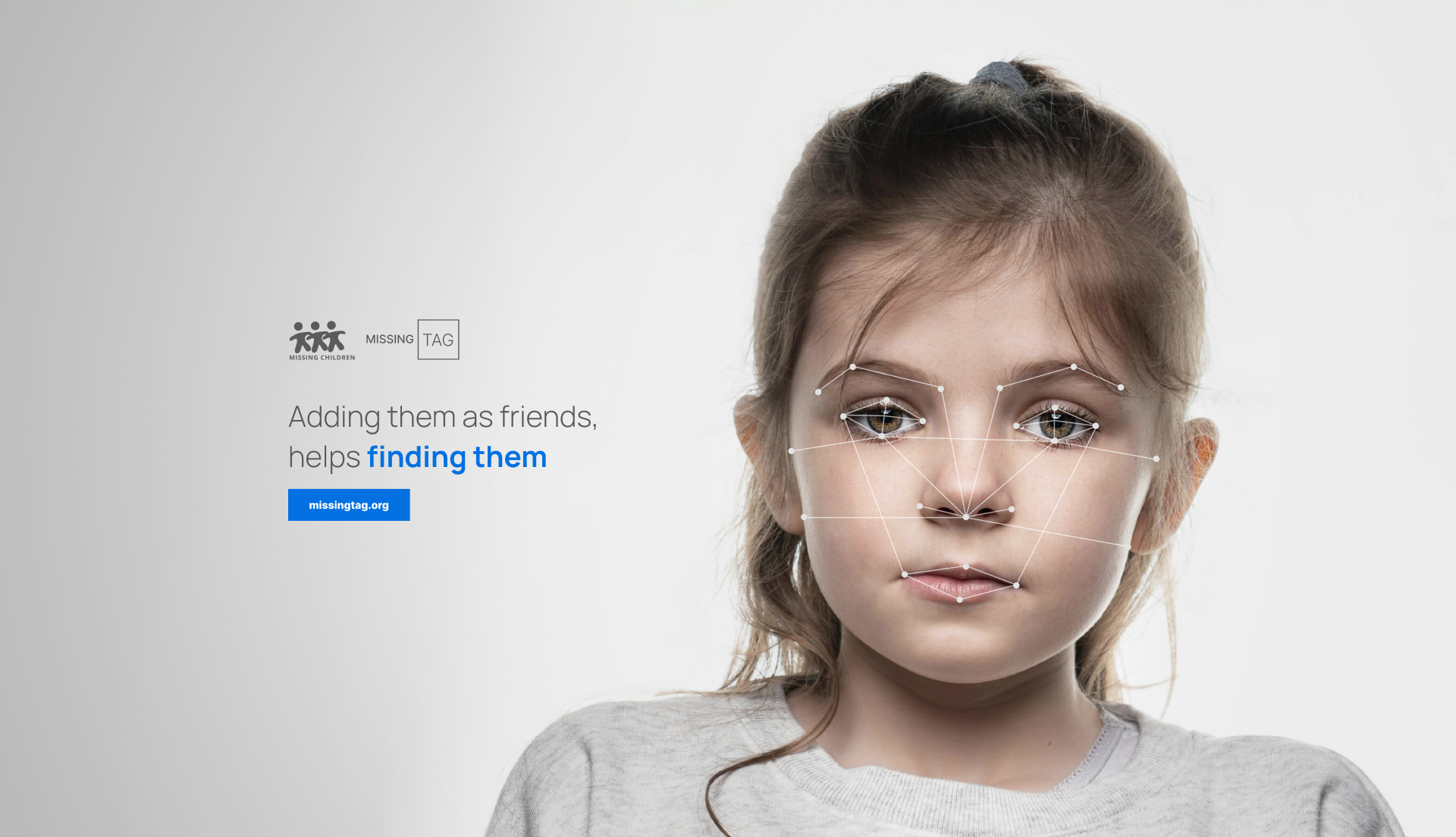
As the lead for the campaign’s visual language, I bridged Institutional trust with tech Innovation.
4__Design Process.
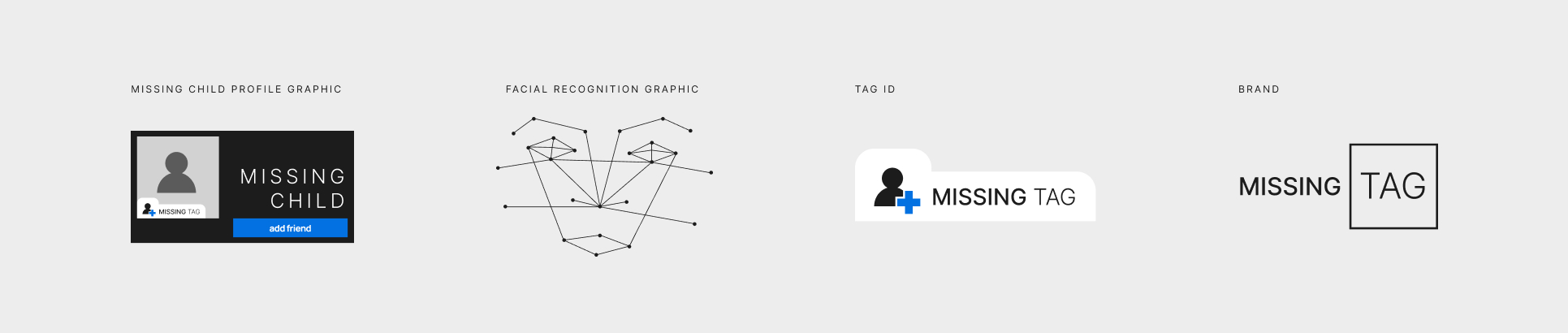
The “Tag” Symbol.
I repurposed the standard UI “Tag” element as a symbol of hope and identification.
4__Design Process.
Visual Consistency.
Developed a scalable visual design system for the web platform and social assets, ensuring the project felt secure and official to users.
Impact & Outcomes.
Success Story.
One child was successfully located through the platform before the API limitations changed.
Impact & Outcomes.
Product Performance.
The platform was highly effective, achieving a 11% conversion rate from website visitors to “Friend Requests” sent. This high conversion was the result of a frictionless UI designed specifically to move users from “awareness” to “action” in seconds.
Impact & Outcomes.
Efficiency.
Increased the “search probability” of the children by 3,000,000x during the first 7 days.
Impact & Outcomes.
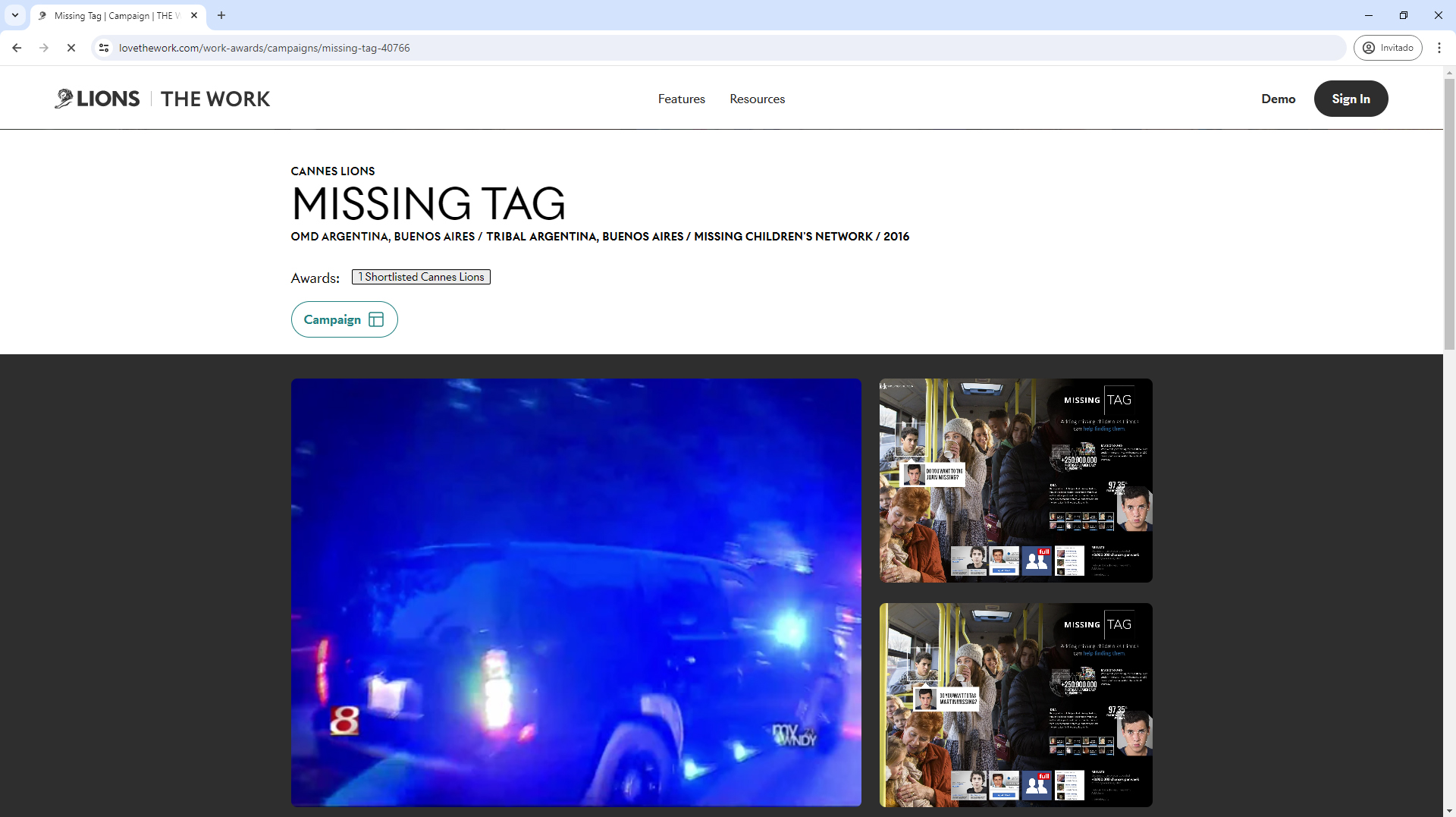
Industry Recognition
(Watch the full award-winning production below).
• Cannes Lions 2016: Shortlist (Media).
• El Ojo de Iberoamérica: 4x Shortlists (Innovation, Media, Sustainable, Interaction).
• The Festival of Media 2016: Gold (Best Social Media Campaign).
• +Digital (IAB) 2016: Bronze (Native Use of Media).
Key Lessons Learned.
A. Platform Dependency.
The “Product Sunset” occurred when Facebook changed its API. I learned that building products entirely on third-party infrastructure requires a contingency plan for platform risks.
Key Lessons Learned.
B. Designing for Social Impact.
When the “User Goal” is altruistic, friction is the enemy. Reducing the effort from “Share this post” to a one time “Add Friend” was the key to our 11% conversion rate.
Key Lessons Learned.
C. The Power of Passive UI.
This project taught me that the most powerful products are those that work in the background of a user’s existing habits rather than demanding new ones.